
“With suspense and even humour, the staging of “Frankenstein” returns to the boards of the National Theatre, this time under the direction of the Spaniard Matilde J Ciria.”
Melissa González, La República.
At the heart of Frankenstein beats an uncomfortable truth: evil is not an innate germ, but a shadow that is projected and cultivated.
THE PROJECT
A dialogue between the monstrous and society.
The invitation from Fred Herrera, then director of the National Theatre of Costa Rica, drew a clear horizon: to conceive an adaptation of Frankenstein that would manifest in the following keys:
- To establish a disquieting parallel between school bullying — that silent scourge that marks youth — and the visceral suffering of the creature in the novel.
- To articulate the narrative in an essential tripartite structure: the primal laboratory, the desecrated family refuge and the icy final pursuit in the snows.
- To unfold before the Costa Rican audience unexplored scenic languages, with butoh dance as the privileged vehicle for the expression of the ineffable.
- To offer two mirrors of the same story: a concise version for the student sensibility (around 45 minutes) and a deeper immersion for the general public (approximately 80 minutes).
It is crucial to underline that this proposal was integrated into the visionary programme “Érase una vez…” (“Once upon a time…”), driven by Fred Herrera from the National Theatre in alliance with the Ministry of Education. A project conceived to democratize access to the cultural wealth of the National Theatre — both its imposing historical architecture and its capacity to evoke worlds through the works presented there — offering it free of charge to all the country’s schoolchildren. I also had the privilege of collaborating on the creation of the pedagogical guide that served as a compass for teachers to expand and enrich the theatrical experience in the classroom.
The result was an artistic fabric of notable quality, woven with the fervent dedication of every person involved. After the 2016 season, the work outshone the other National Theatre productions of that year, chosen by the schools themselves to revive its impact the following year, again under the auspices of “Érase una vez…”. Thus, in 2017, we undertook this creative odyssey once more, fine-tuning scenes and polishing the narrative rhythms with renewed care. We were fortunate to share this work with around 20,000 spectators, making it the piece with the greatest direct resonance in my career up to that date.
We delve into the emotional labyrinth of Víctor and his creature, figures that embody the intricate duality inherent to the human being.


I vividly remember the full theatre, the bustle of hundreds of teenagers, the laughter during the first scene. I remember the silence; the wonderful silence of nearly 800 young people is overwhelming. And the work was working — some who stood up at the start, to see better from boxes with poor visibility, did not sit back down. You could feel it in the silence, you could feel it in the applause.


ADAPTATION AND DESIGN
Navigating uncertainty, sculpting the vision
This piece stood as an Everest of personal and artistic challenges, an unexplored territory where the vertigo of failure lurked at every step. I faced, on one hand, the imposing infrastructure of the National Theatre, a bureaucratic colossus before which my smallness felt palpable. Then, the task of breathing new life into an immortal novel, revisited ad nauseam, marked my debut in literary adaptation for the stage, all without neglecting the artistic and technical demands required. Added to this was the complexity of collaborating with an unknown creative team, separated by ten thousand kilometres, and the constraint of working with a predefined cast.
After the initial immersion in Mary Shelley’s universe and its contextual resonance, the first decisions had to take shape quickly, marking the start of the creative dialogue with the set designer and the composer.
The creature emerged as the central axis, the lighthouse that would guide the narrative. I also identified two nuclear moments, two points of dramatic inflection that, integrated as interludes, would allow the work to be presented in fluid versions of approximately 50 and 70 minutes, without interruptions that would fracture the emotional rhythm of the piece.
I was fortunate to weave this intricate design with a team of exceptional artists, whose enthusiastic dedication and innate talent eased every stage of the process. Despite the physical distance, we managed to build an artistic framework of profound beauty. When I finally set foot on Costa Rican soil to begin rehearsals, the work already possessed a robust and promising skeleton, ready to come to life.


Beyond the skin of the story, my search focused on unravelling the pretexts that drive it and the subtext that beats in its depths, longing to offer the audience a visceral, uncompromising experience.
Dear Monster: (by Fred Herrera)
After almost two centuries of existence, you have won the affection of millions of people. You are above all a creature found on the border between several kingdoms — hence that form of “monstruum” that characterizes you.
You are between life and death. You are between outer ugliness and the beauty of your sensitive inner soul.
You are between gestures of tenderness and, on the other hand, gestures of deep anger and resentment toward your creator, Doctor Frankenstein and his family, and finally the whole society that has rejected you and closed its doors.
Each of us identifies with you to some degree, because we all have personal aspects that are not accepted by the “norms” of society.
You are the student who suffers physical, verbal or psychological abuse, the so-called “matonismo” or “bullying”, where sometimes the student ends up believing they are truly a misfit.
We hope that this staging, made with butoh technique and physical theatre, can touch the sensitive fibres of every spectator and celebrate once more the struggle we must all wage to find a space within our society where our “singularities” can be accepted.Fred Herrera. Director General. National Theatre of Costa Rica.
ARTIST’S NOTE
“Working with this myth made me understand that we are all creators of monsters. As the fox in The Little Prince said, “we are responsible for what we tame”. True monstrosity lies in the inability to love what we create in ourselves. I hope the audience leaves with more compassion toward their own inner monsters.”
THE WORK
Unveiling the layers of the monster
The primordial challenge lay in penetrating the sensibility of the adolescent audience. I sought an imperceptible narrative scalpel, sweet on its surface, that would invite the lowering of defences and critical predisposition, thus opening the door to abstract languages and unpleasant content that, with the help of butoh, would let the profound existential complexity nesting in the original work permeate the bodies of those present.
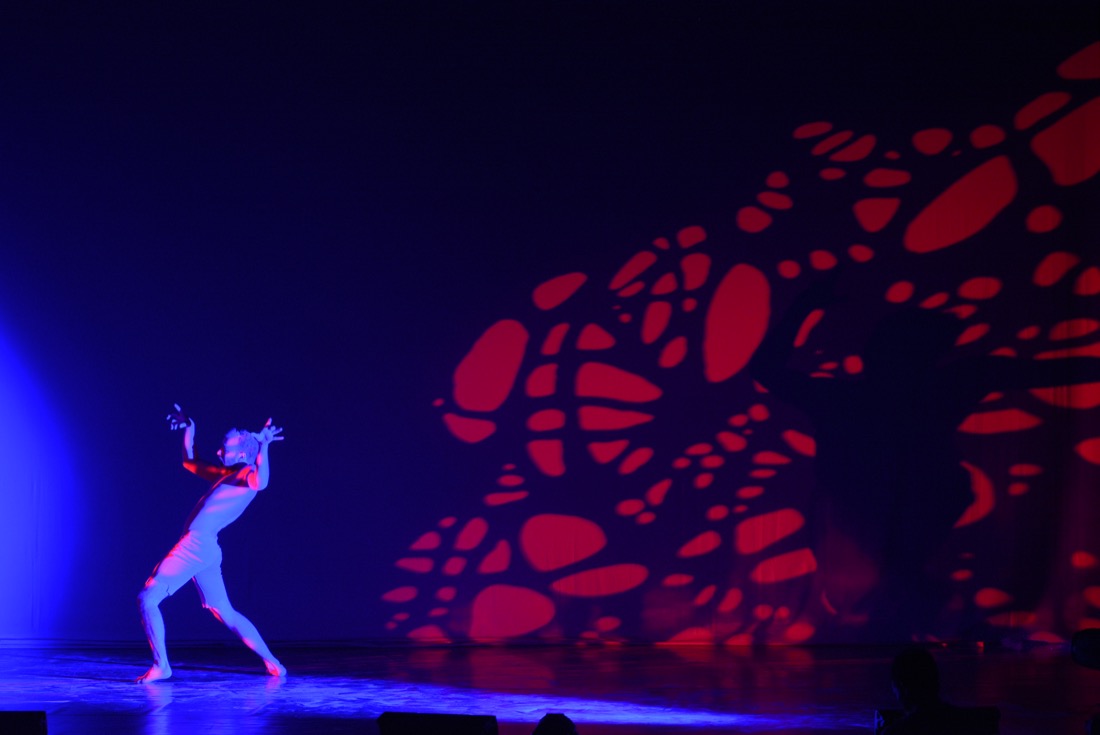
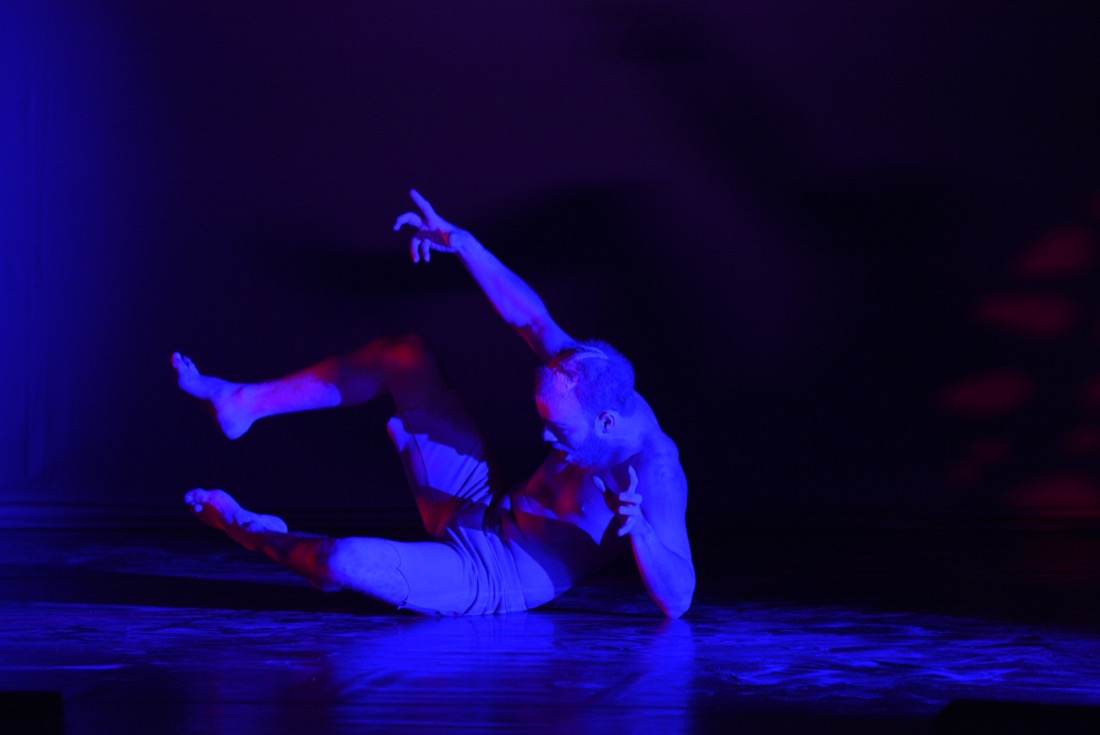
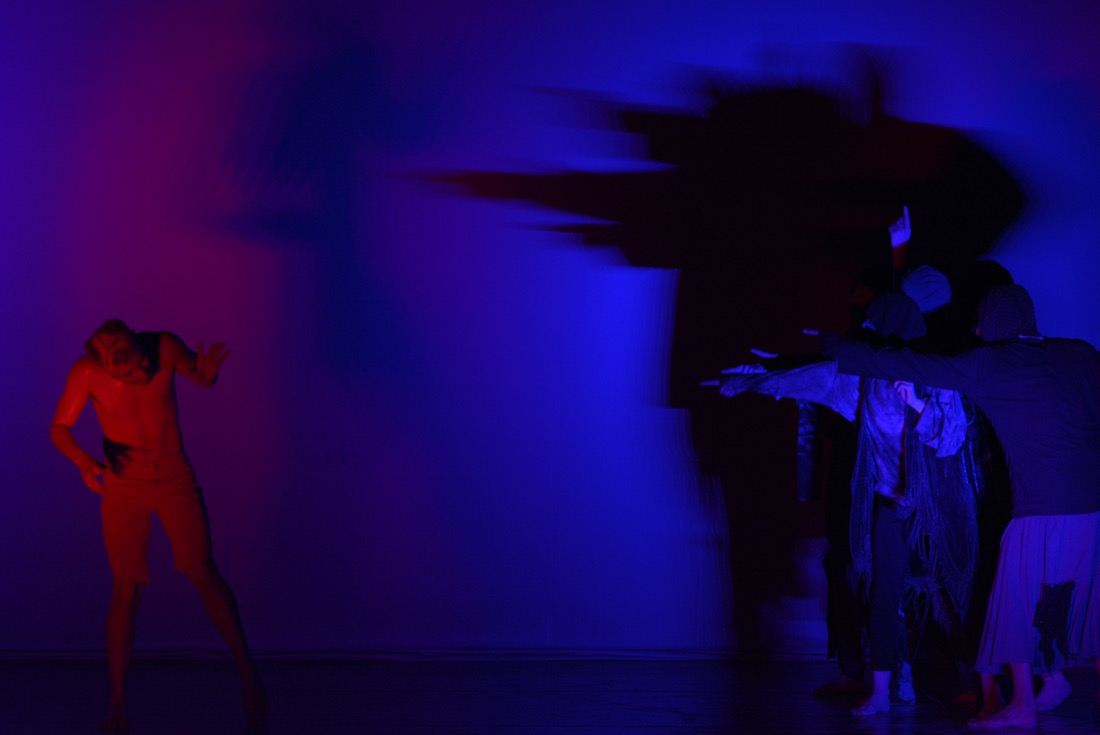
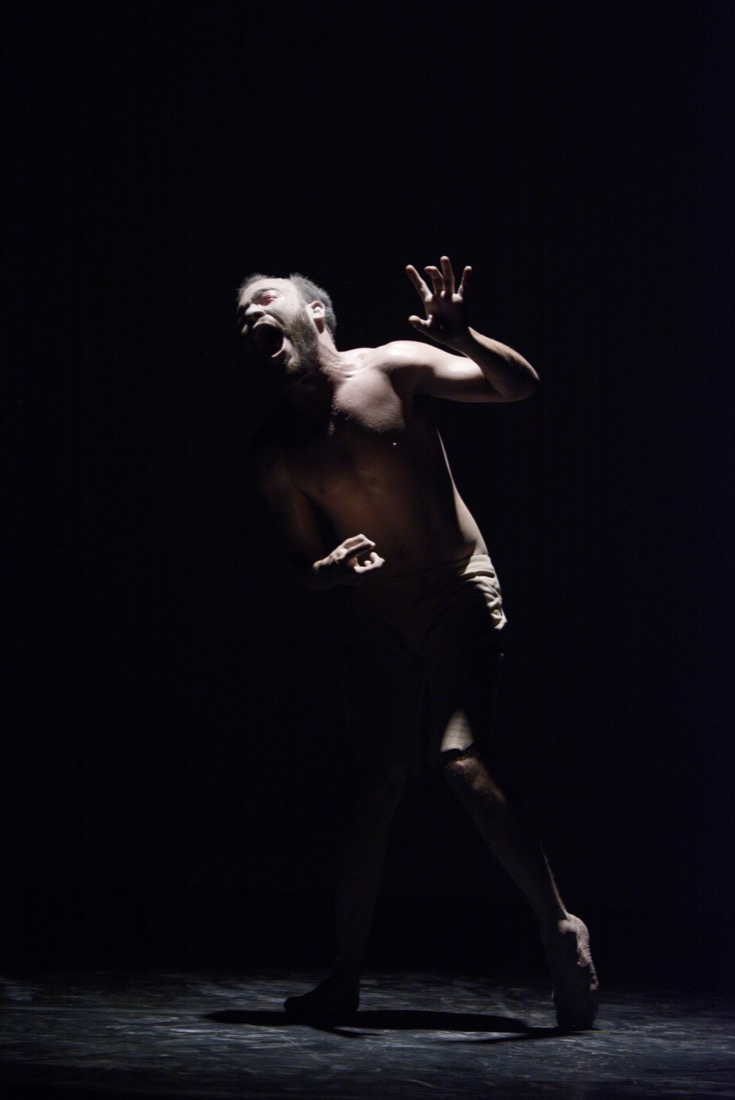
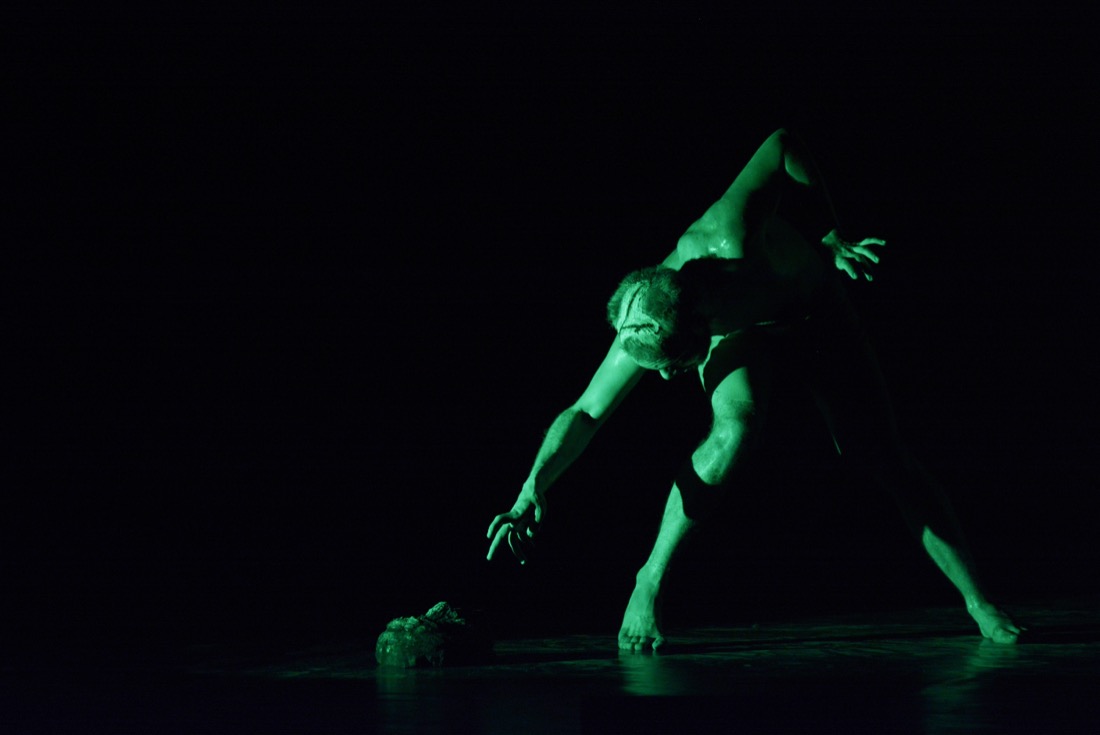
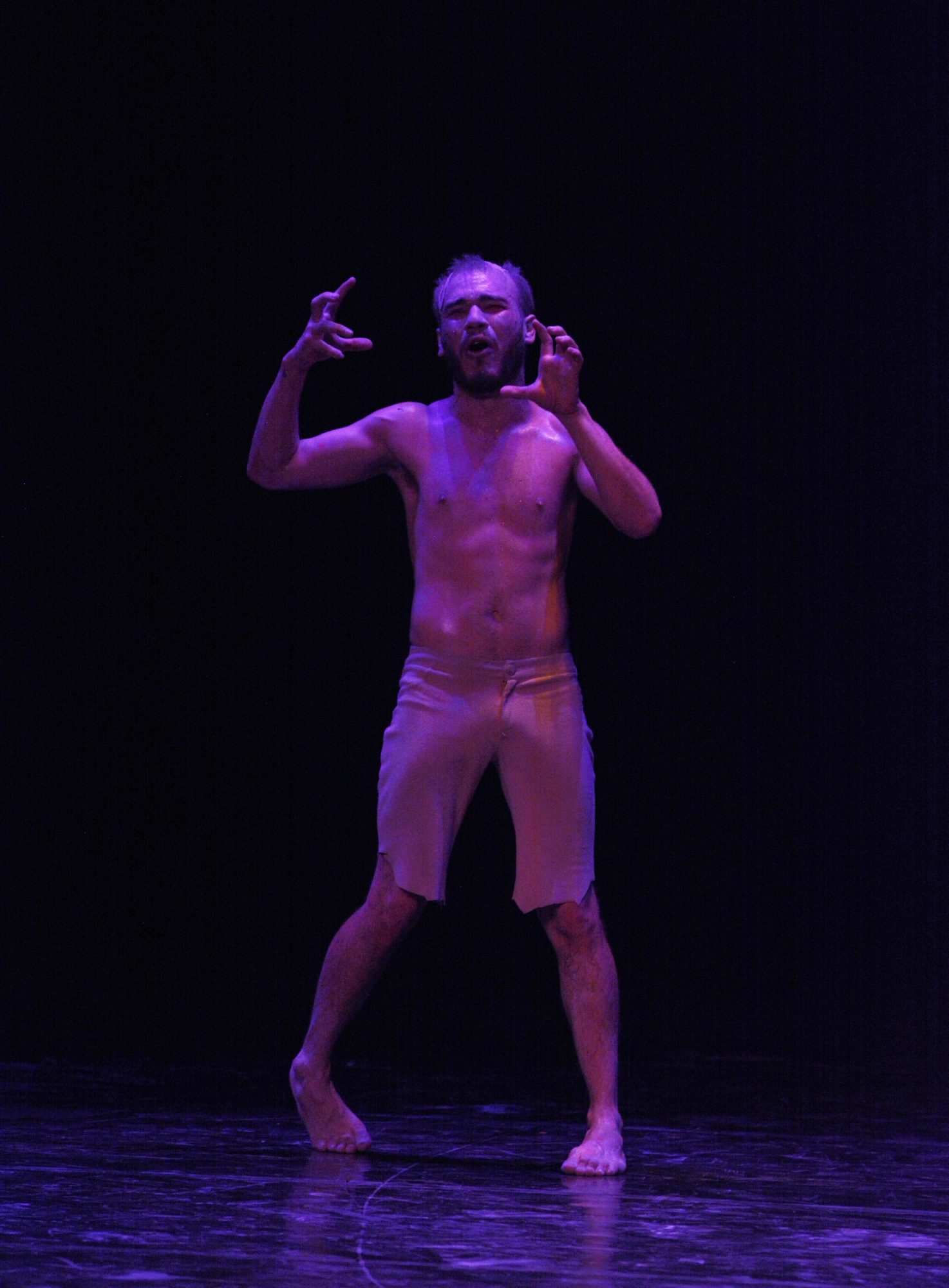
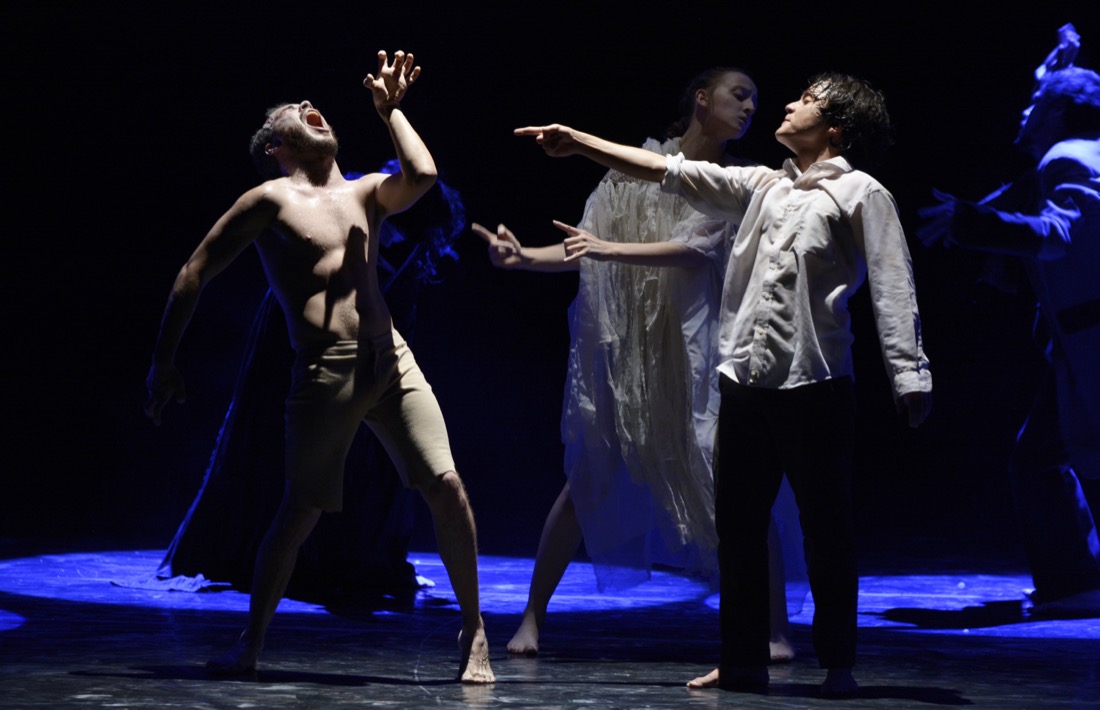
The creature stood as a constant anchor: from its abrupt genesis, its scenic presence is uninterrupted. Its physicality is moulded in the visceral cadence of butoh; even the modulation of its voice emanates from this extreme bodily language. A palpable red thread the spectator can cling to, allowing a visceral empathy with the silent cries of its heart. The strangeness of this physical language becomes naturalized, paving the way for the dramatic evolution of the work. On a technical level, its continuous presence also offered the possibility of fluid scenographic transitions, without fracturing the continuity of the action.
To delve into the spectator’s psyche, I conceived the structure of the work as a palimpsest of narrative layers. A framework that could progressively shed its superficial elements until reaching a raw, essential nakedness.
A journey from the intellect to the bone that unfolds in a non-linear way.
FIRST ACT
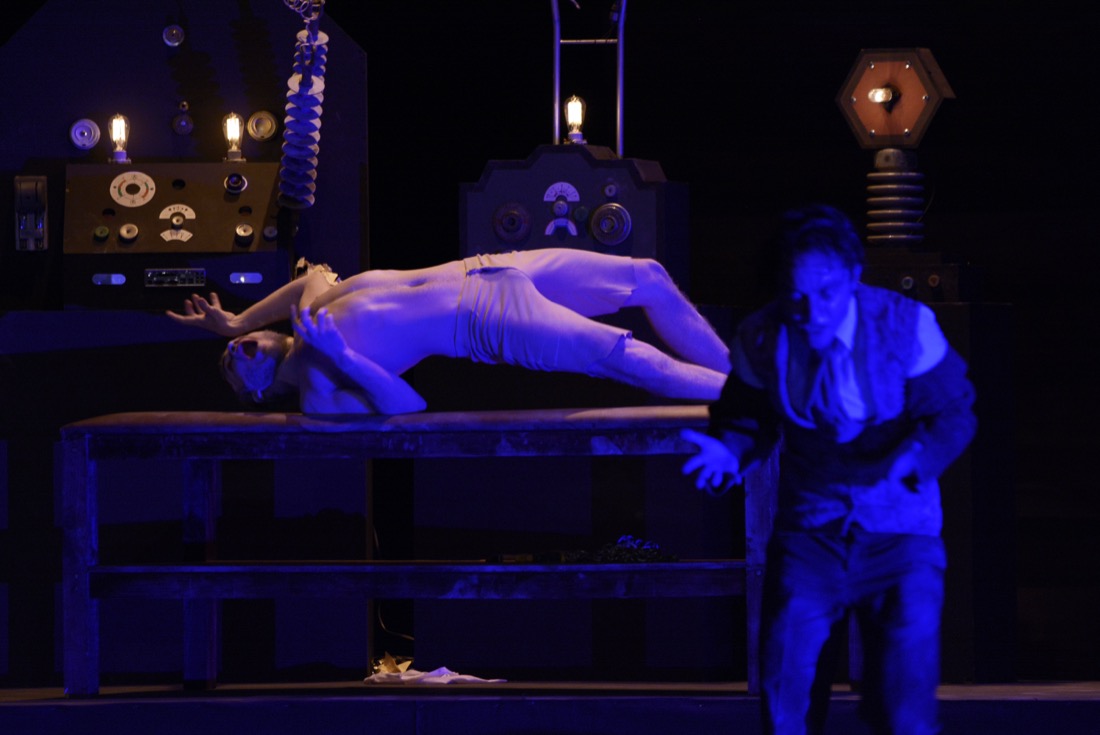
The gestation of two monsters.
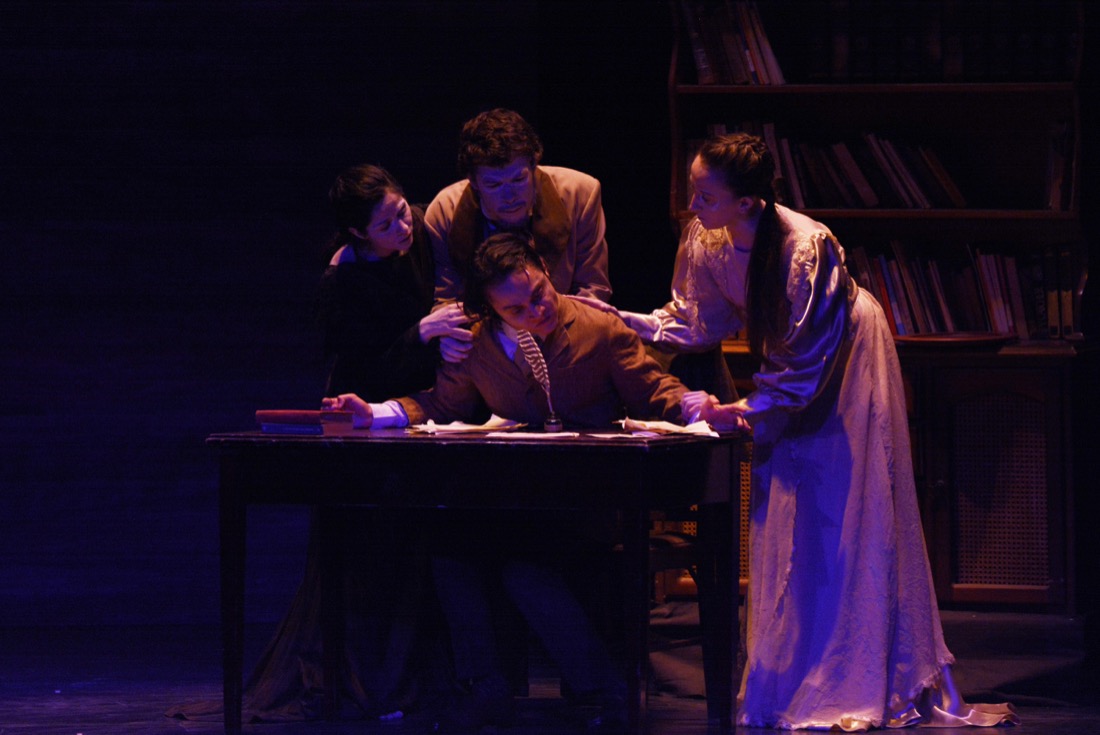
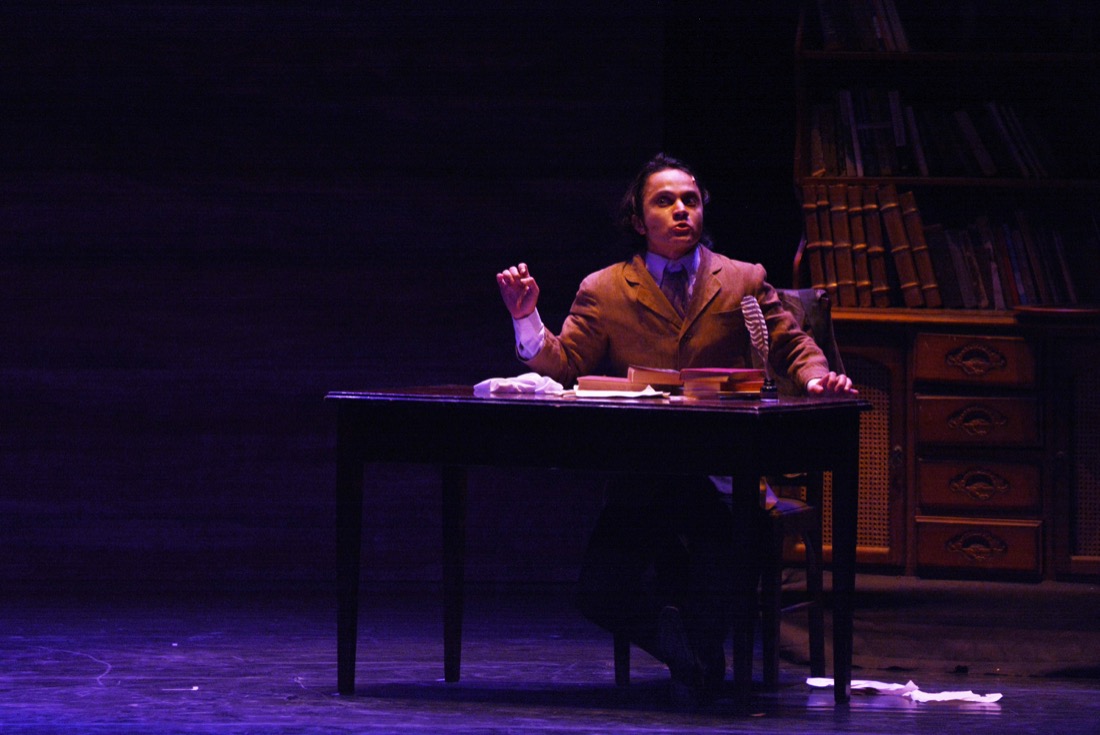
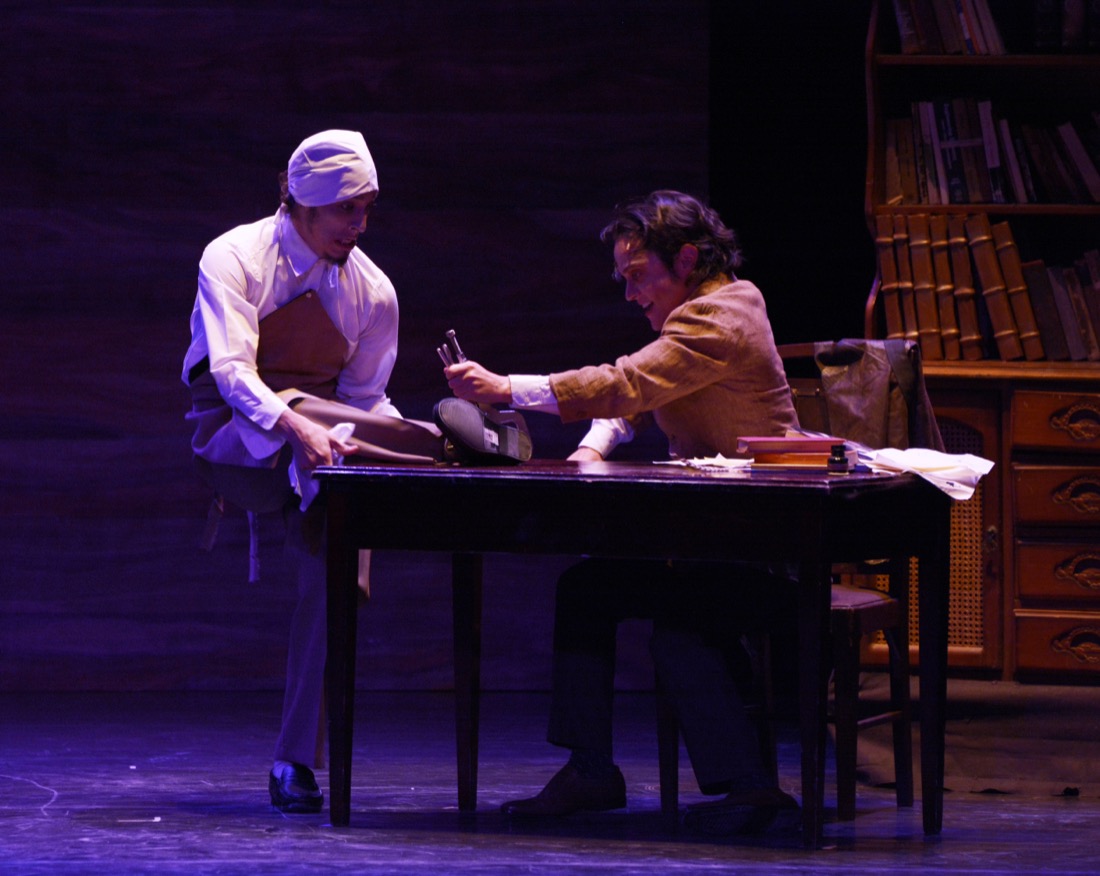
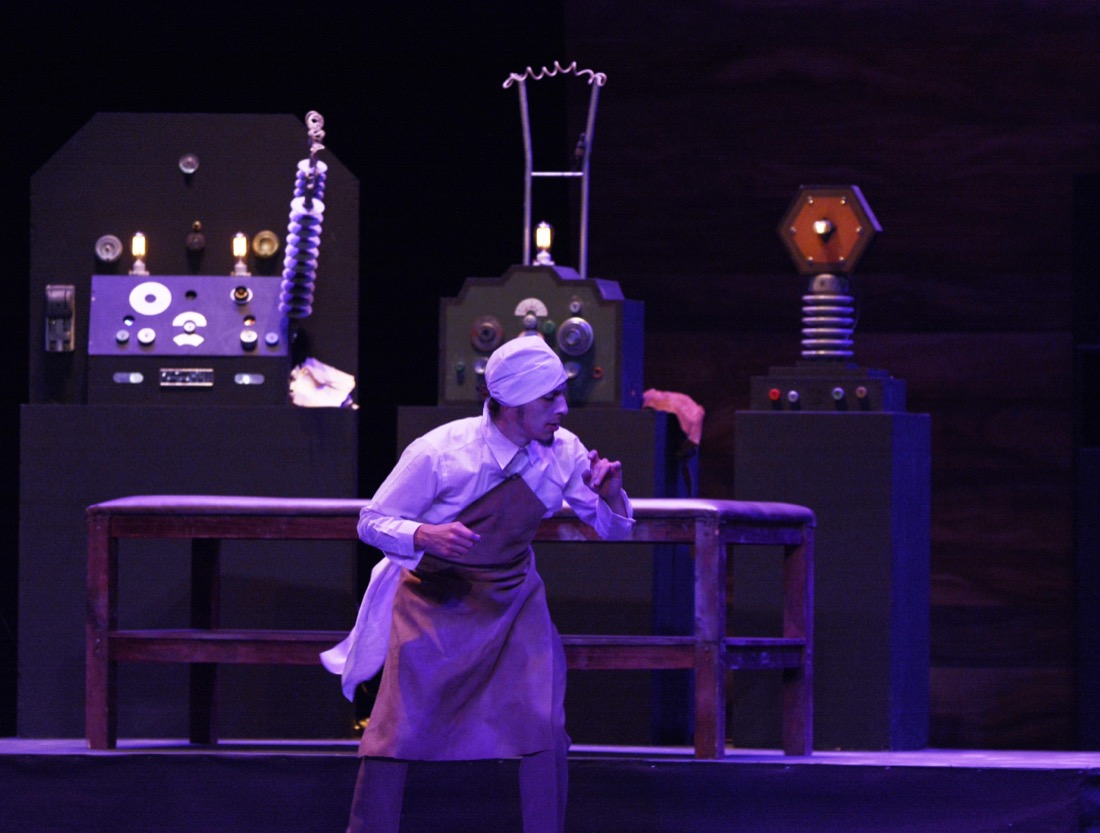
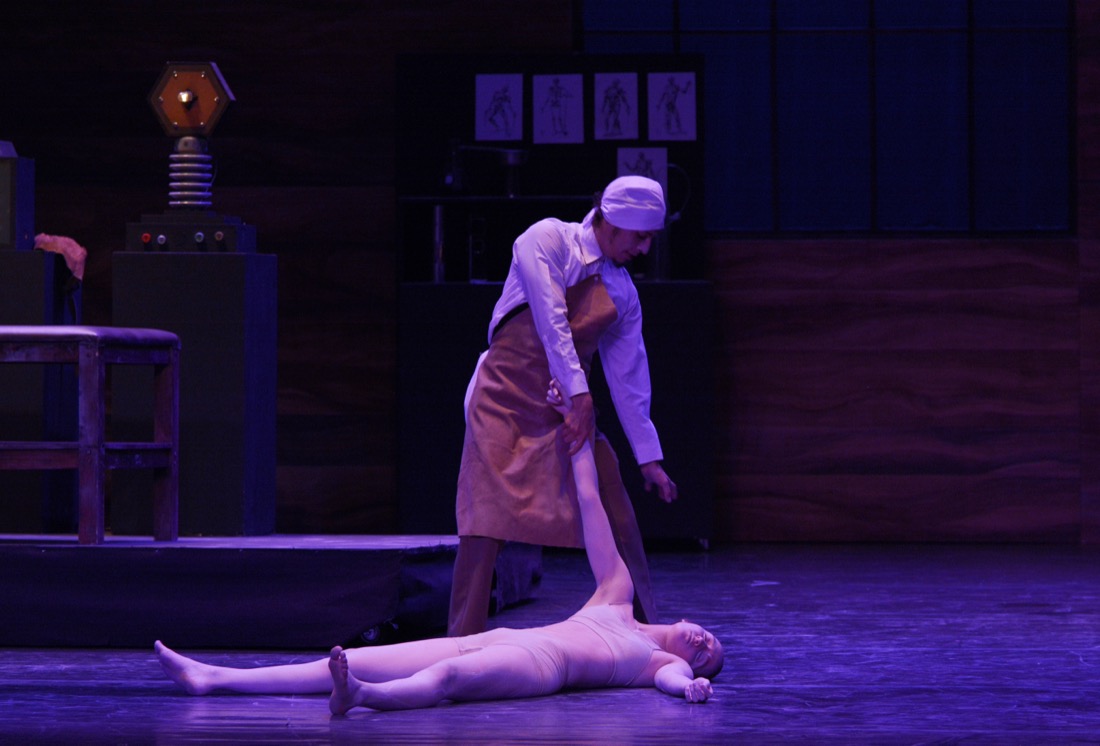
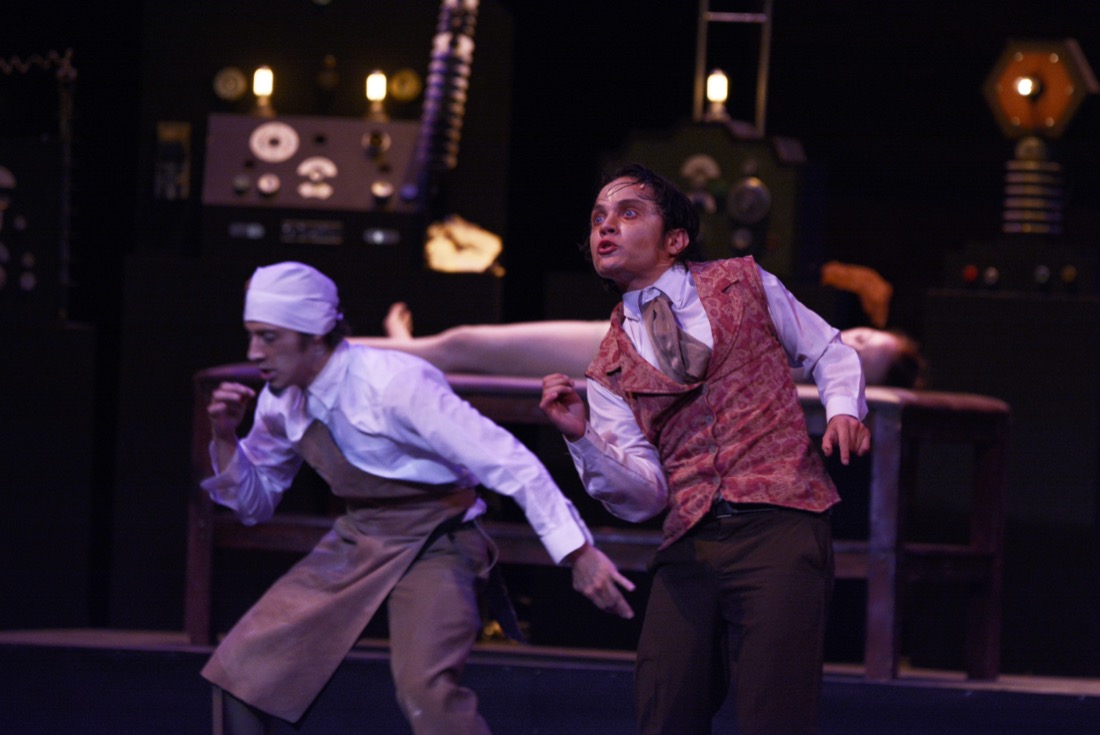
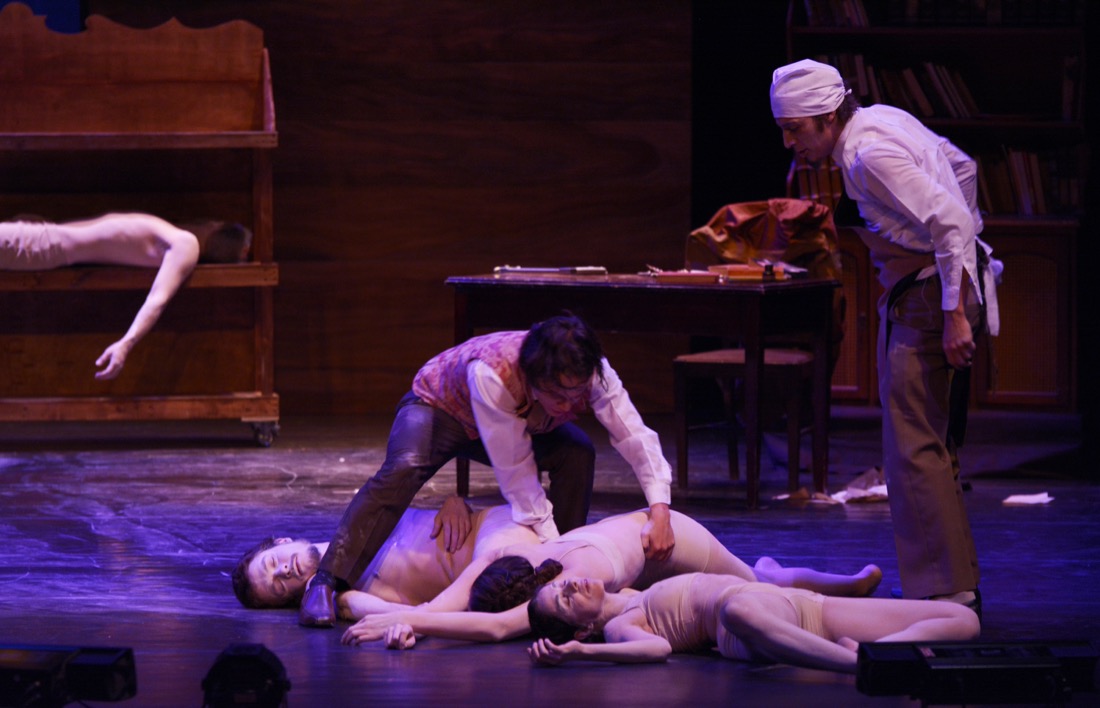
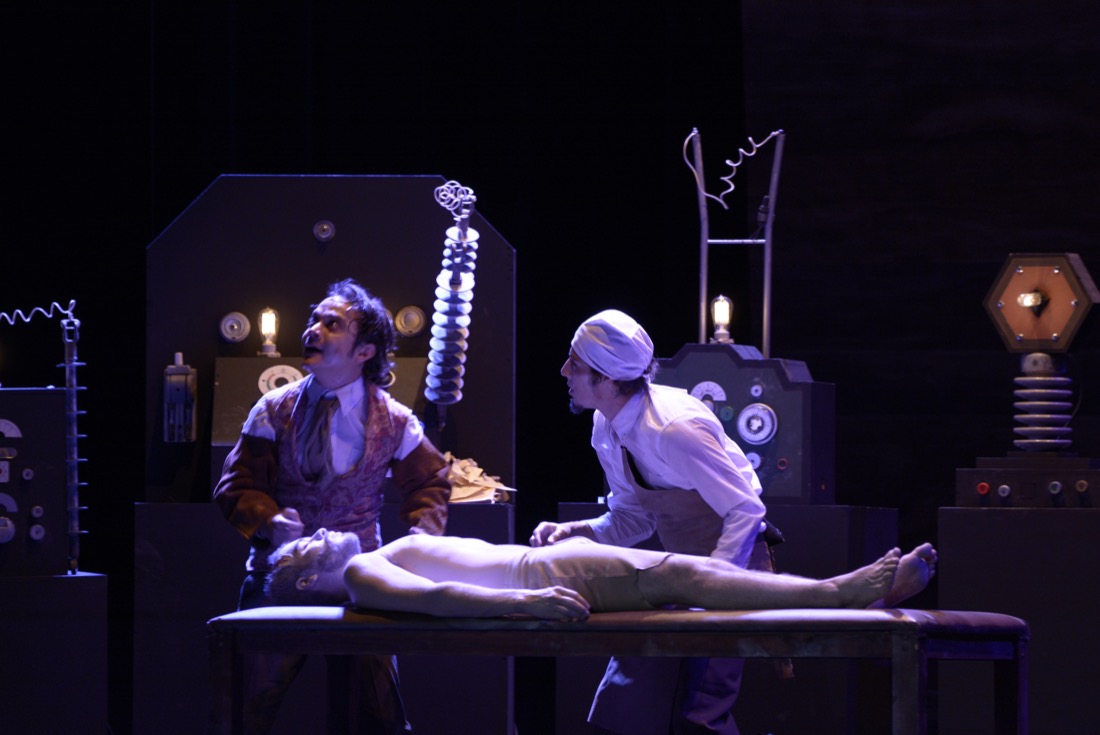
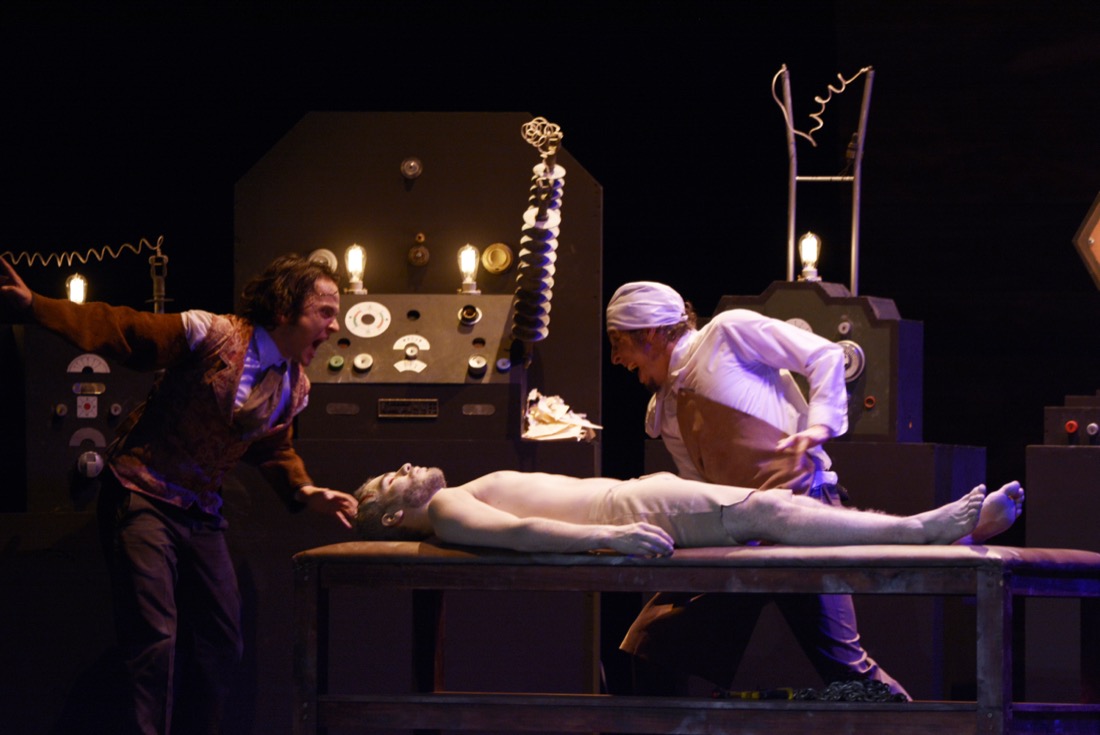
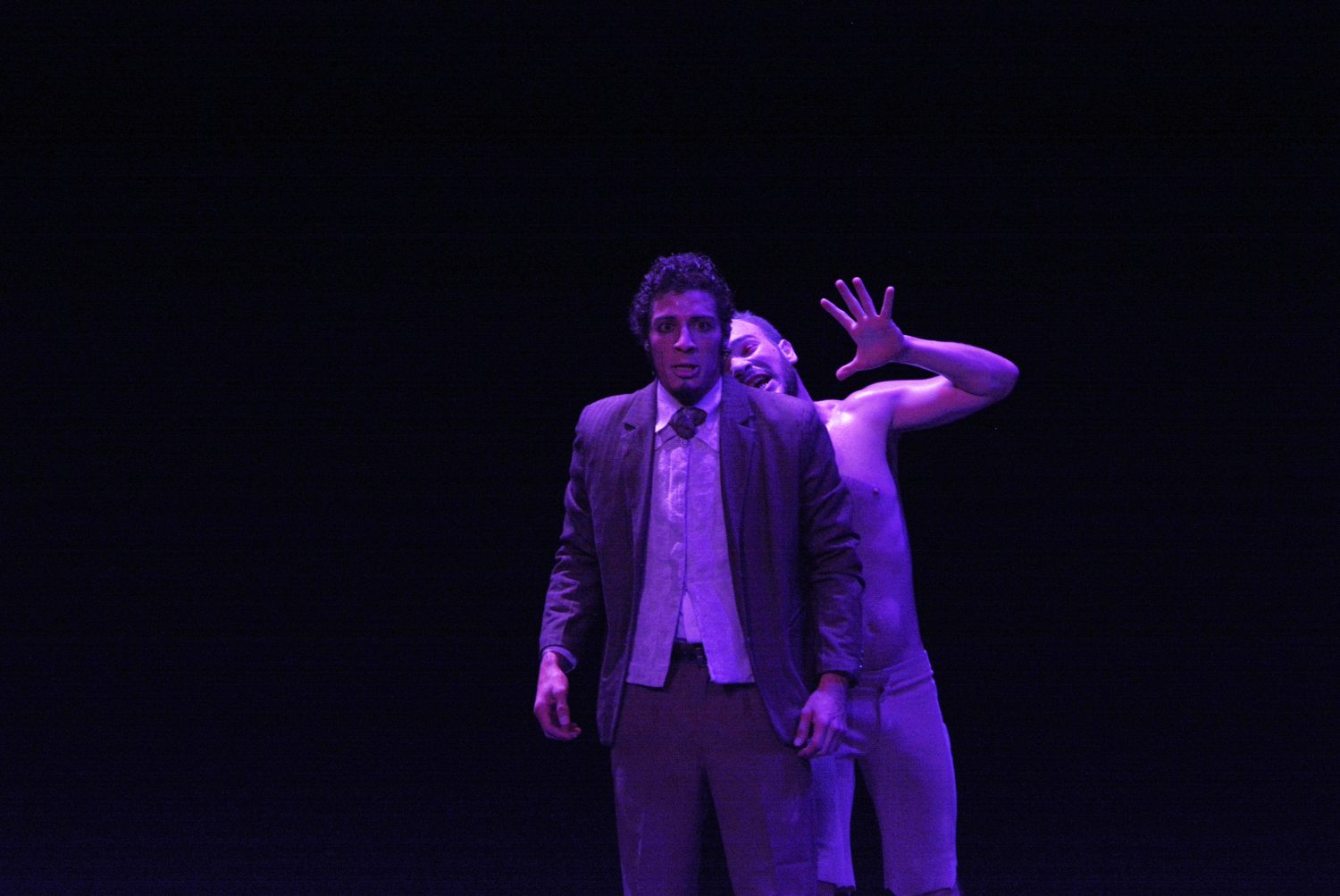
Wrapped in an atmosphere of grotesque comedy, it presents a grandiloquent, feverish Víctor alongside a clumsy, mute, deranged assistant: an echo of the classic duo of the auguste and the white clown, Viktor and Igor.
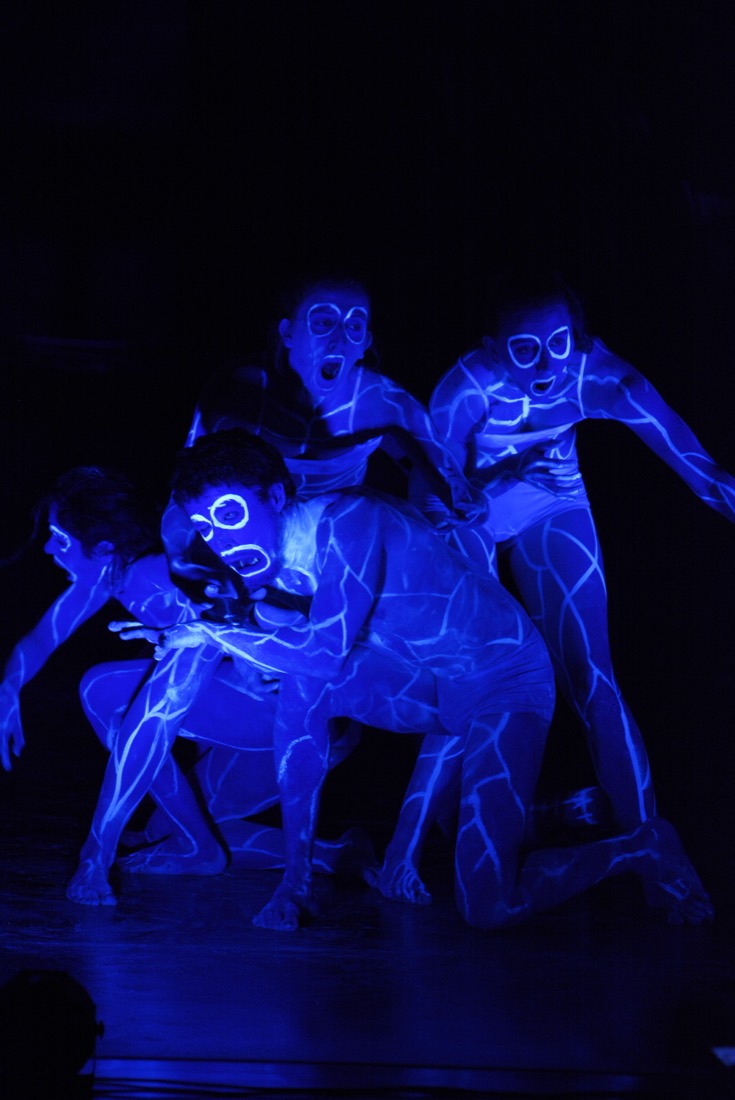
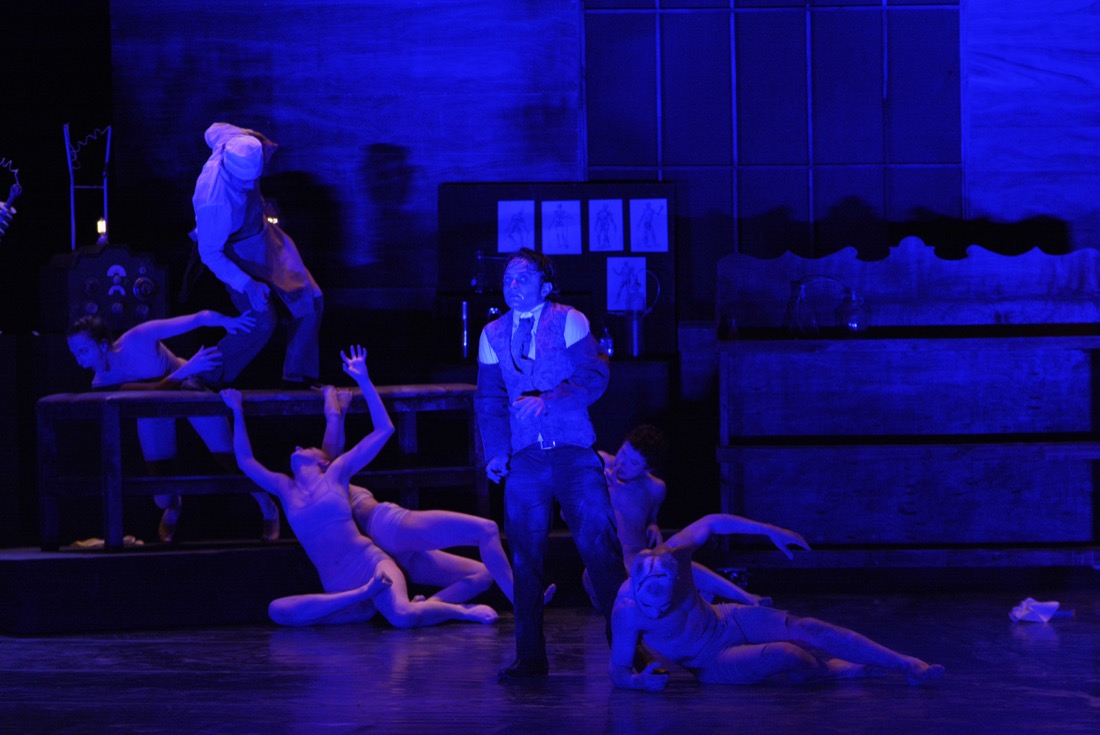
It culminates in a surrealist nightmare that projects the growing madness consuming Víctor after he repudiates his creation.
ACT 1 GALLERY

INTERLUDE
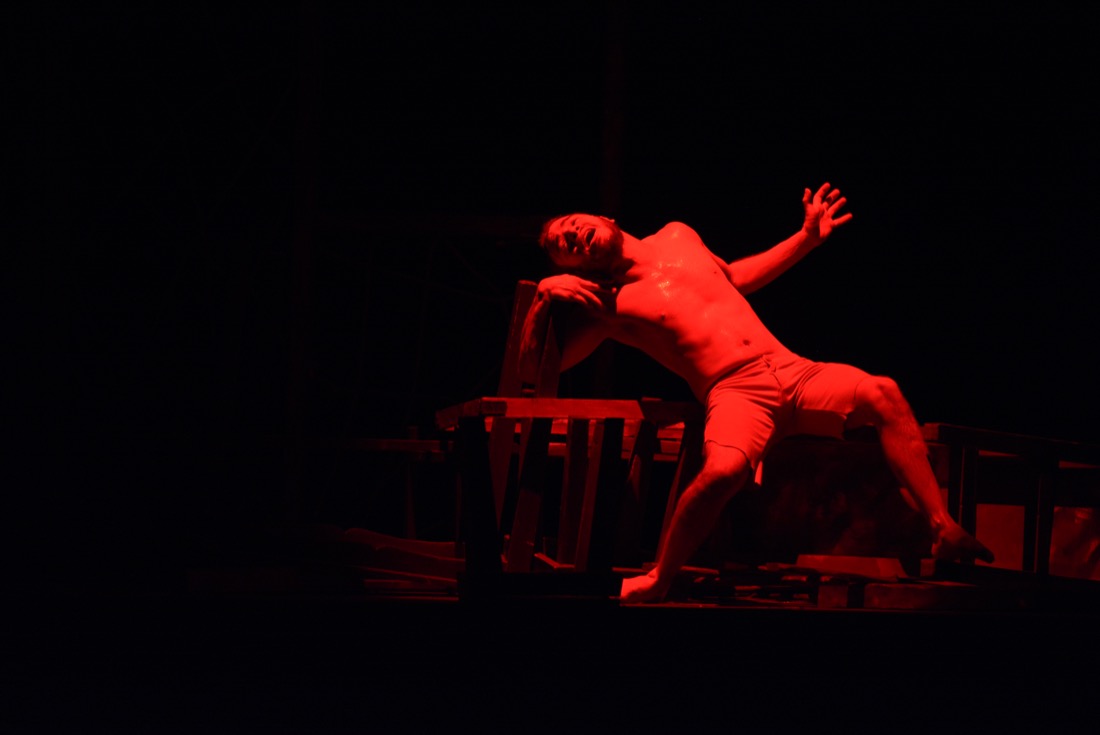
A crucible of the creature’s first metamorphosis, doomed to the rejection of its creator and of society. A purely physical language, where butoh emanates from every corner of the stage like a silent scream.
INTERLUDE GALLERY
SECOND ACT
The mirage of affection.
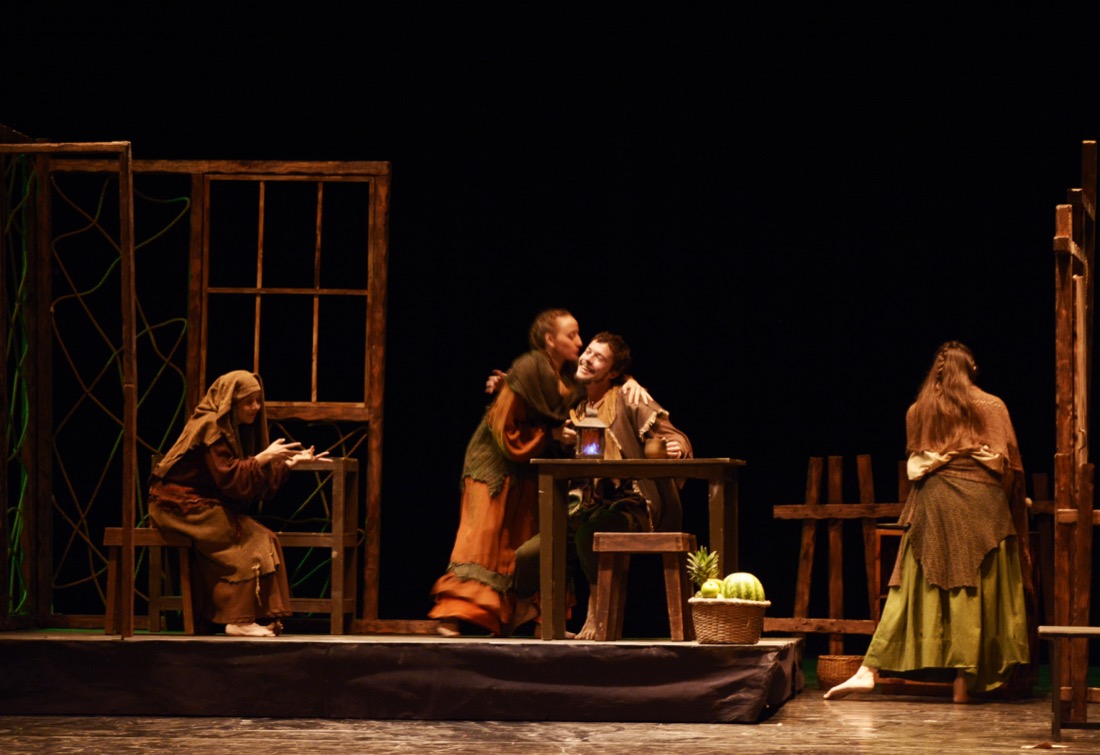
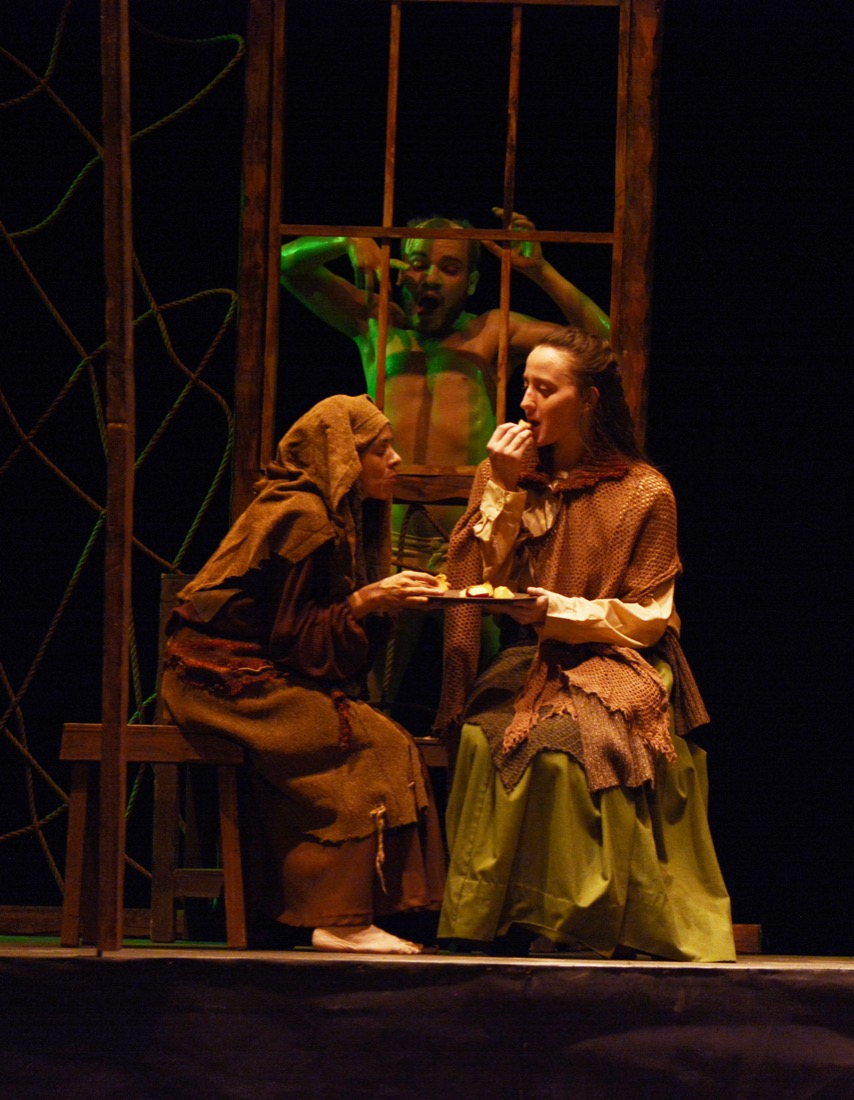
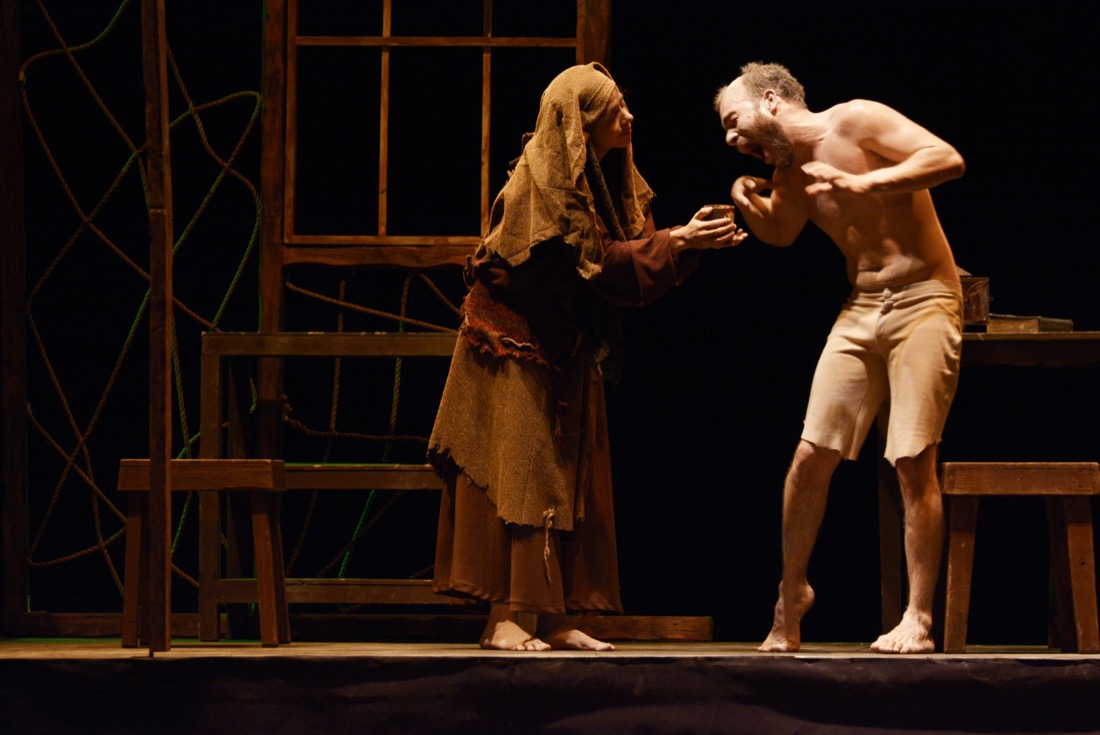
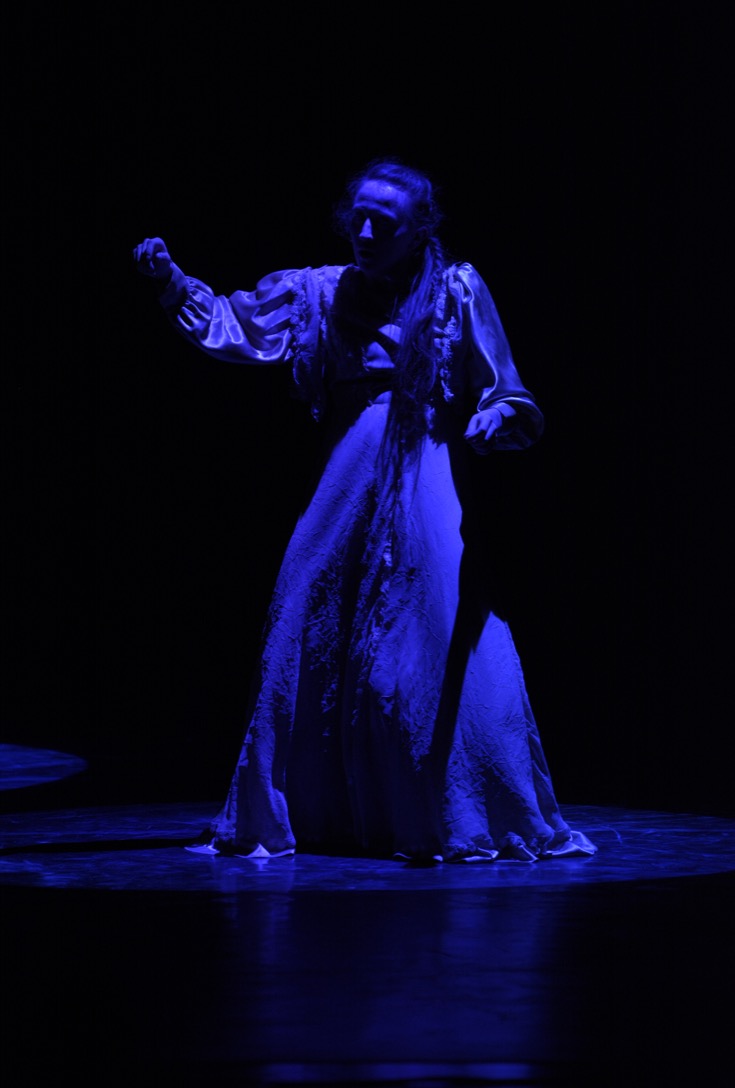
The creature glimpses the warmth of affection and care, even experiences a hint of love.
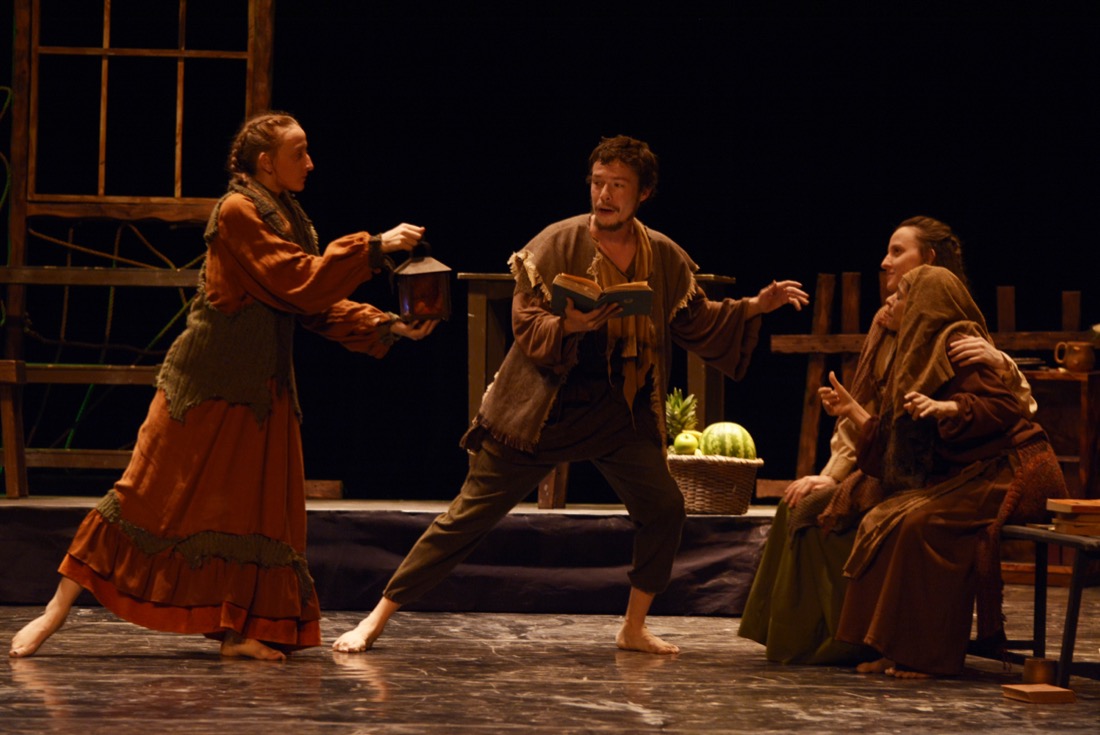
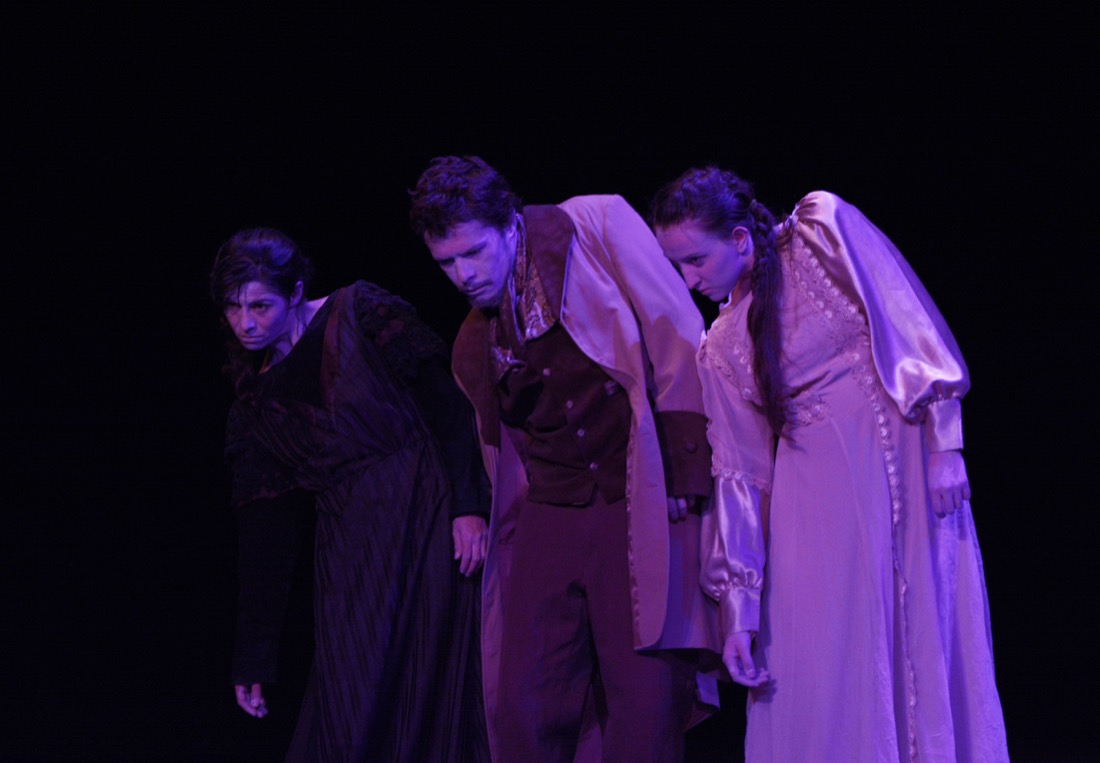
The family’s movement is grounded in a gestural theatre with echoes of classical mime: ethereal, precise and delicate movements that contrast with the creature’s roughness.
The word yields its prominence to fragments of the works that nourish the creature’s intellect (Goethe, Plutarch, Milton), presented as the father’s nighttime narrations to the family.
The act plunges into darkness with the creature’s fury destroying the family home after the painful rejection of the blind old woman.
ACT 2 GALLERY
INTERLUDE
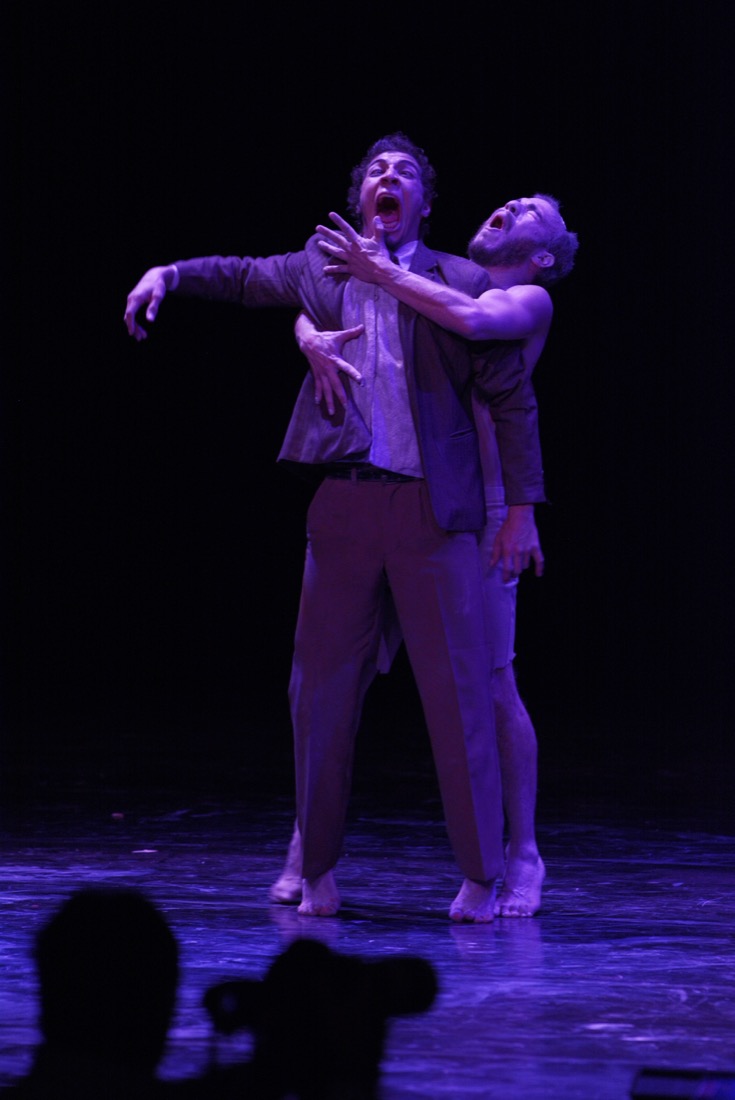
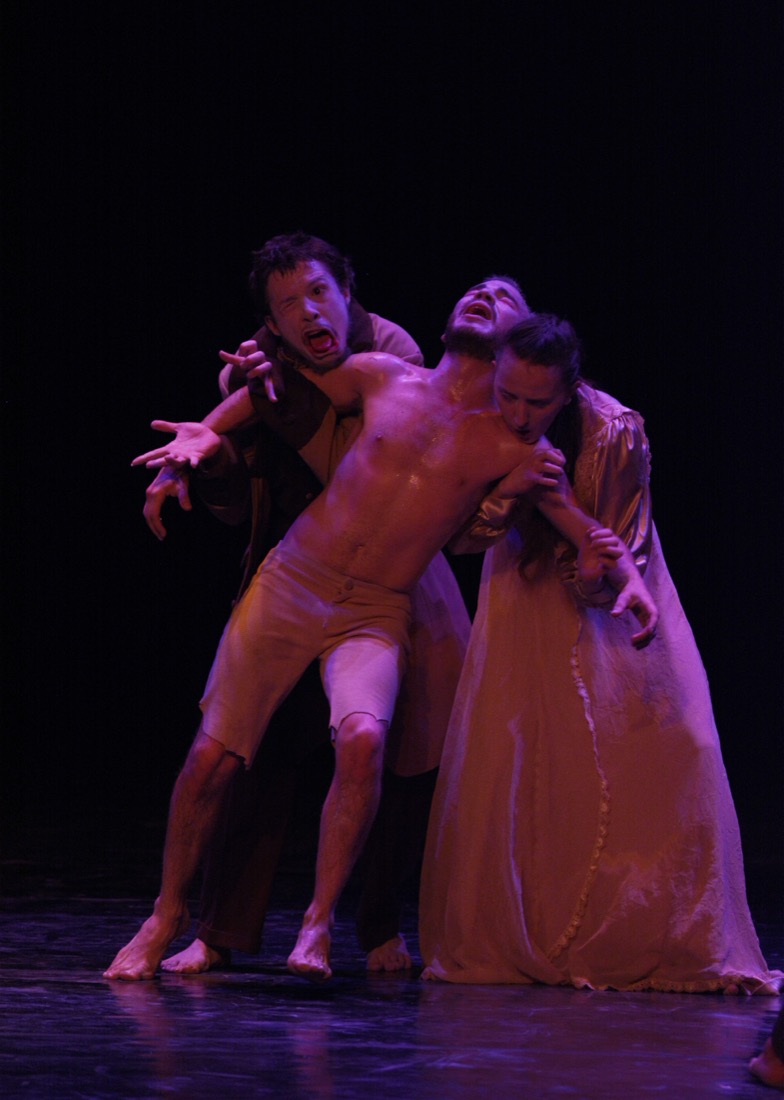
A danced diptych that moves between contemporary dance and physical theatre, with traces of contact impro.
It narrates the desperate efforts of Víctor’s family (William) to rescue him from his madness.
Its outcome is tragic: the creature takes William’s life.
INTERLUDE GALLERY
THIRD ACT
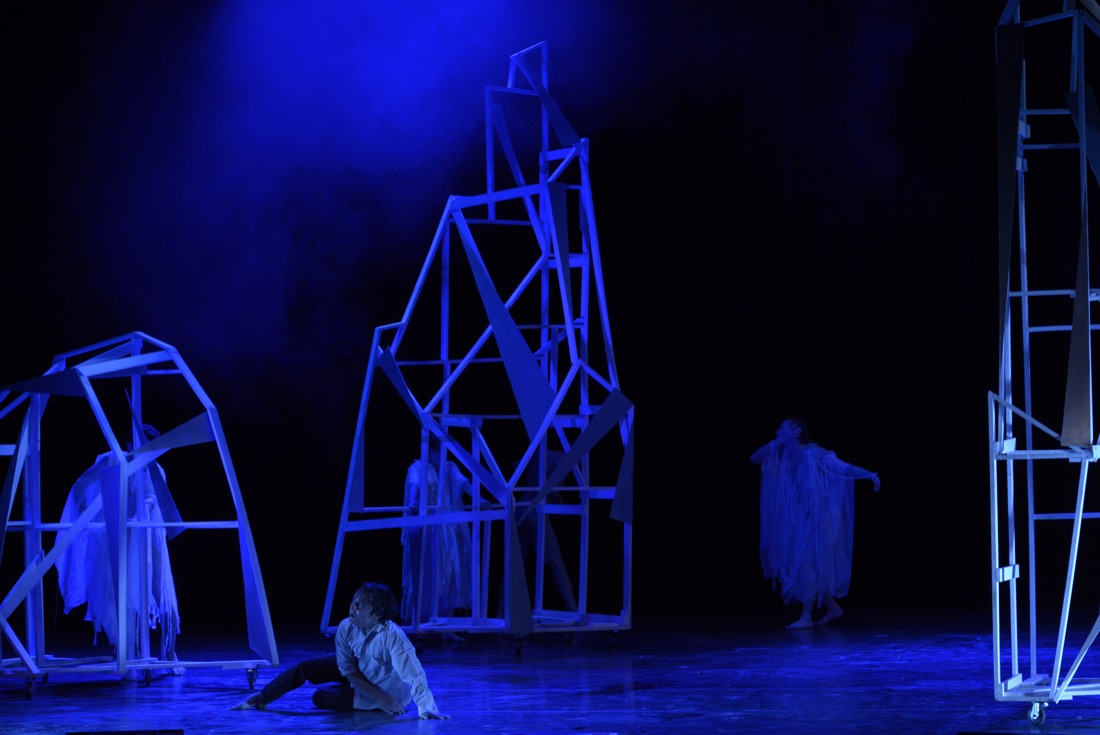
The abstraction intensifies.
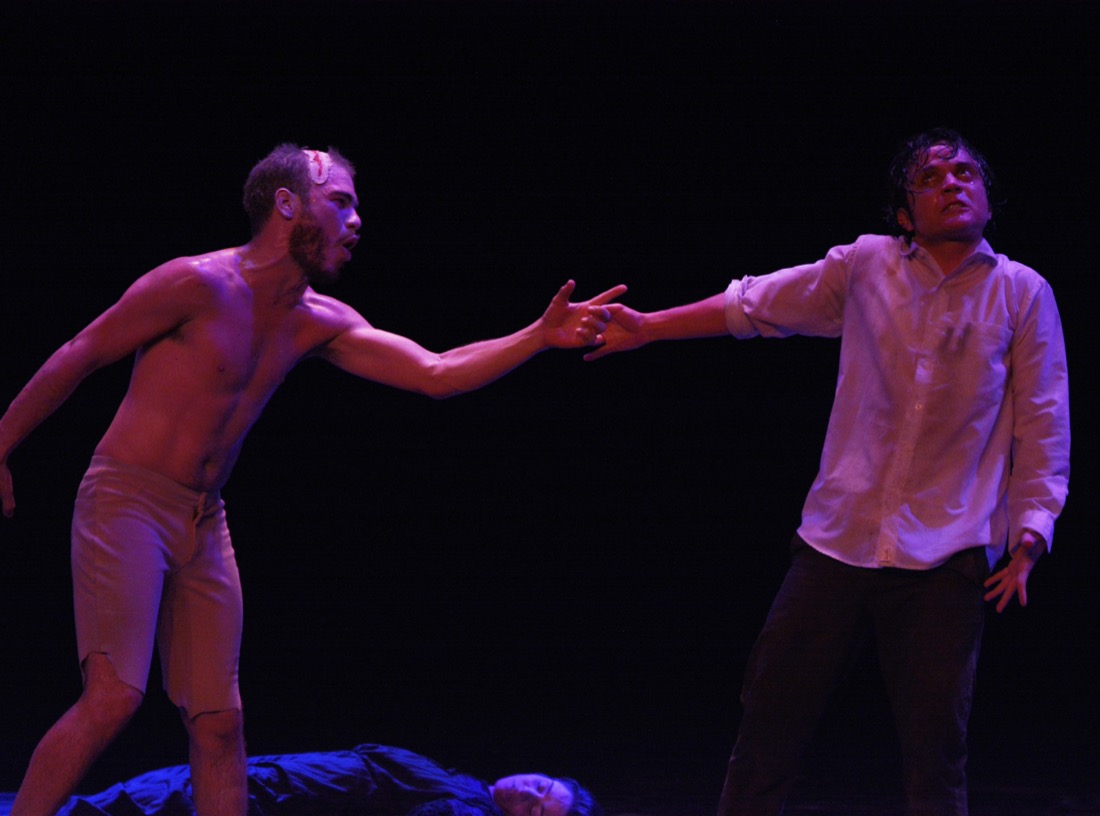
At the start, Víctor and his creature engage in a chilling dialogue while, on a parallel plane, the creature consummates the murder of the family.
The dialogue breaks when Víctor, in a last desperate attempt, seeks to confront his creation, failing resoundingly.
The epilogue plunges us into a dreamlike landscape of perpetual ice, where the memory of Víctor’s family pushes him into an endless pursuit that inevitably leads him to death.
ACT 3 GALLERY
ARTISTIC CREDITS
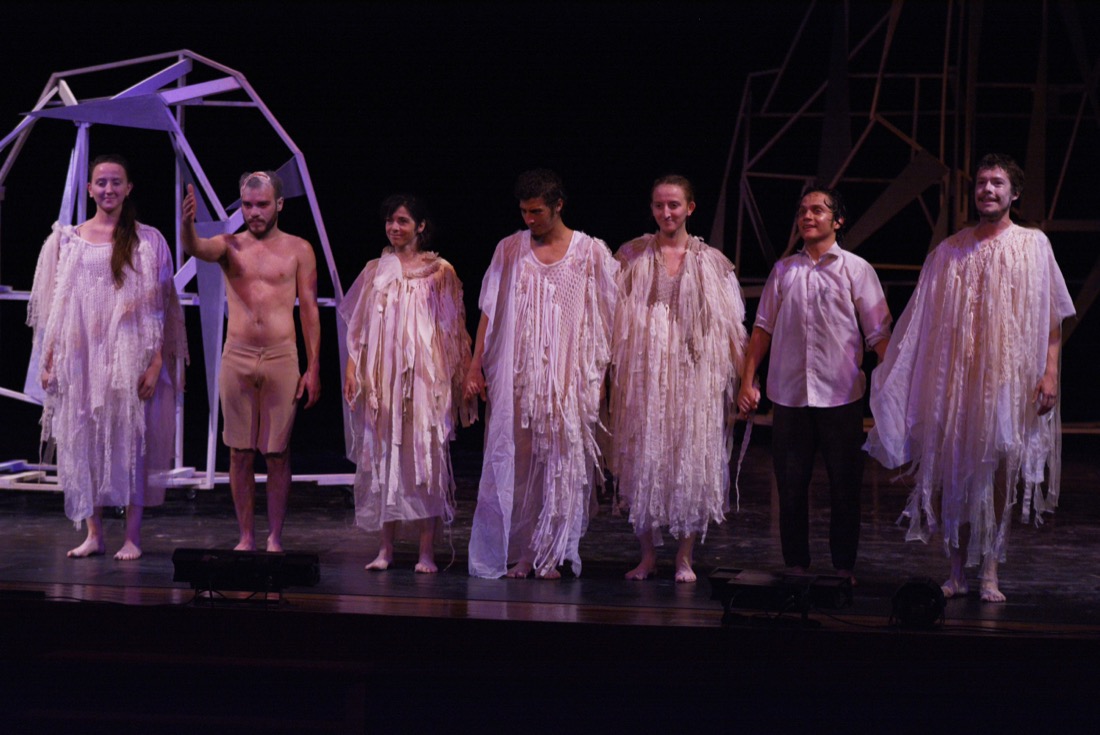
· Classification: Theatre / Physical theatre / Clown / Butoh
· Cast
Arturo Campos
Michael Dionisio Morales
Luis Daniel Cubillo
Noelia Jiménez/Diana Betancourt
Greivin Chavarría/Dennis Gustavo Quirós
Katherine Moya
Karina Moya
· Stage direction and adaptation: Matilde J Ciria
· Assistant director: Rafaela Bidarra
· Artistic production: Sofía Rodríguez/Sonia Suarez Gomez
· Set design and construction: Fernando Castro
· Costume design: Rolando Trejos
· Original music: Fabian Arroyo.
· Lighting design: Telémaco Martínez
· Make-up: Manuel Vindas and Maurice Sagot
· Graphic design: Natalia Calderón, Vanesa Martínez and Ana Mariela Rodríguez
· Photography: Ana Mariela Rodríguez