
“We are all participants in the performance, just like the entire theatre building, the creators and the technical staff: there is no ‘outside’; here everything is inside.”
Harag Georgia Theatre
CONCEPT
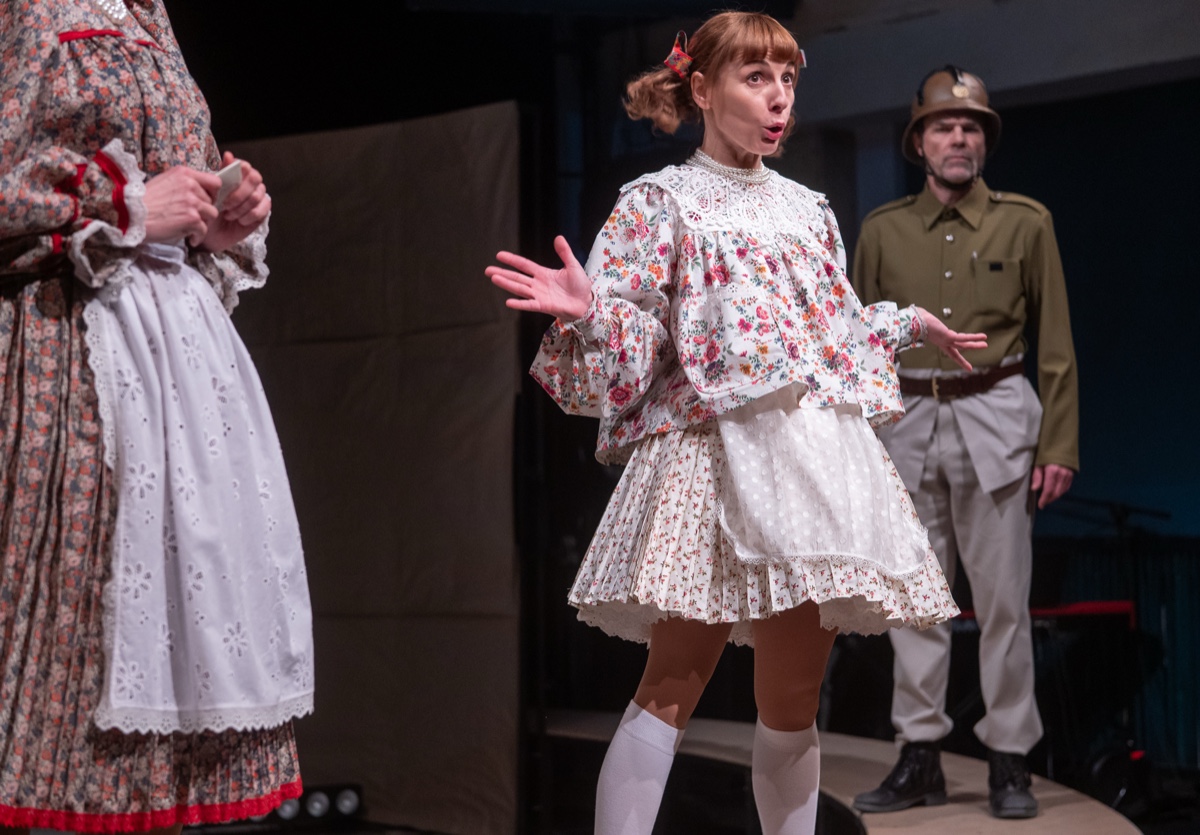
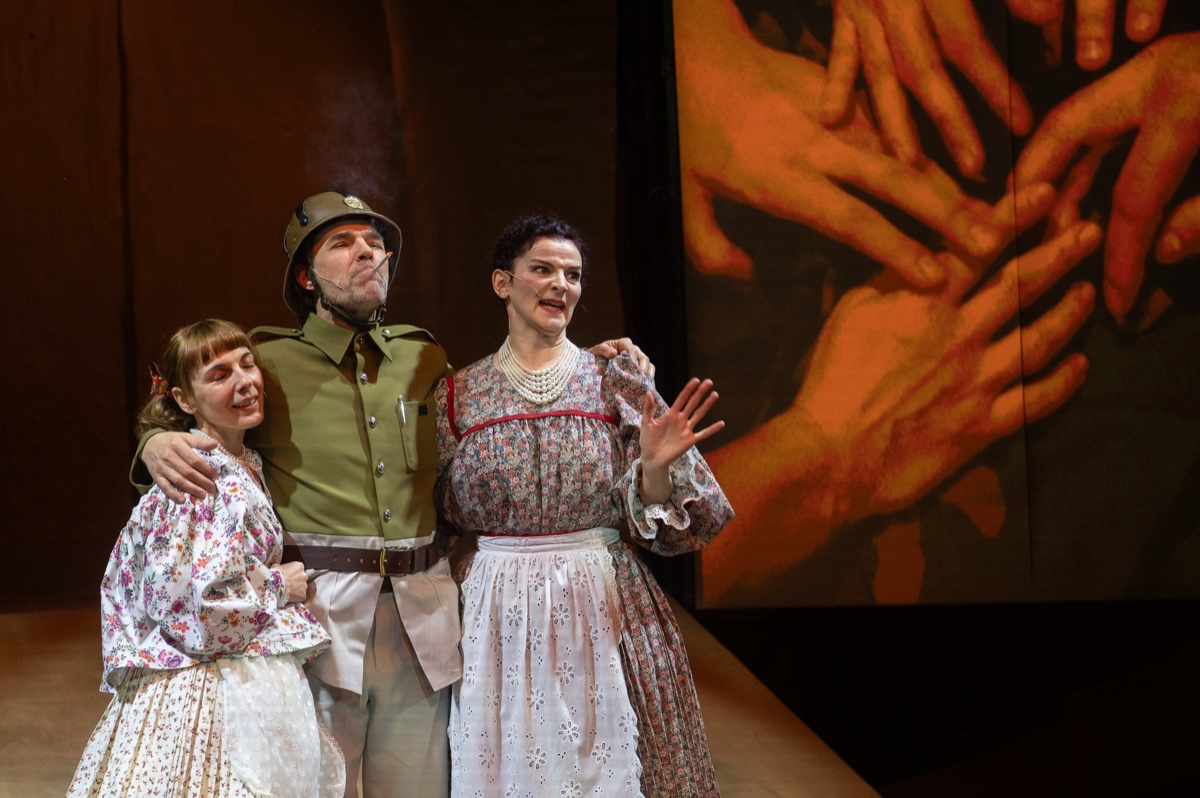
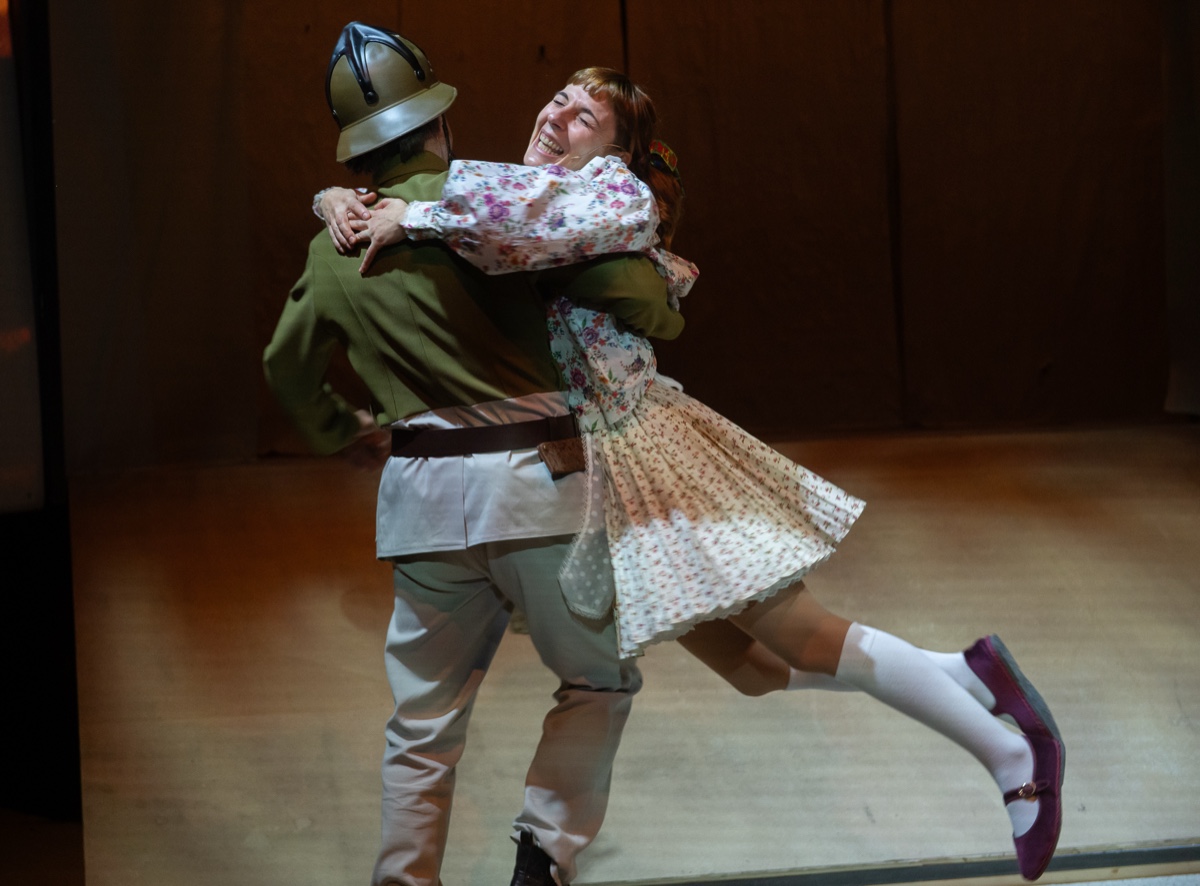
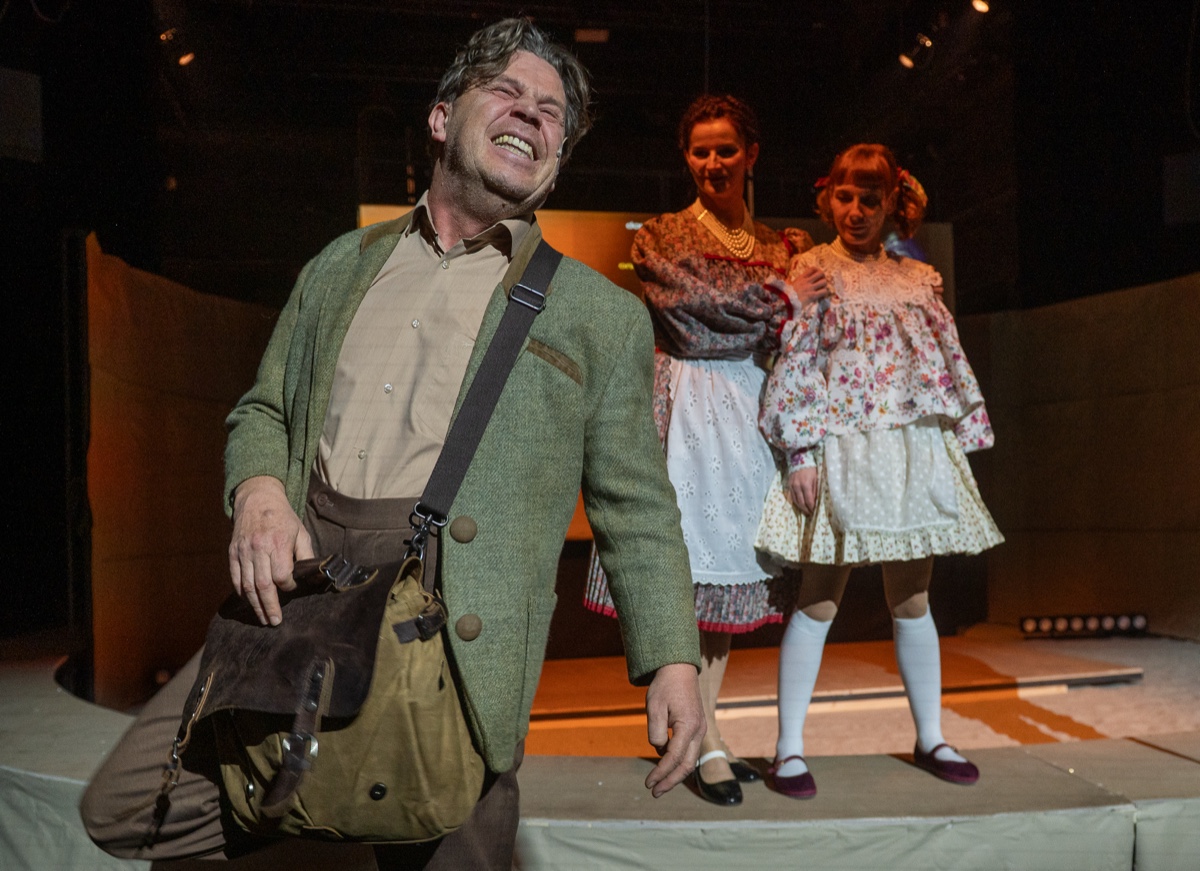
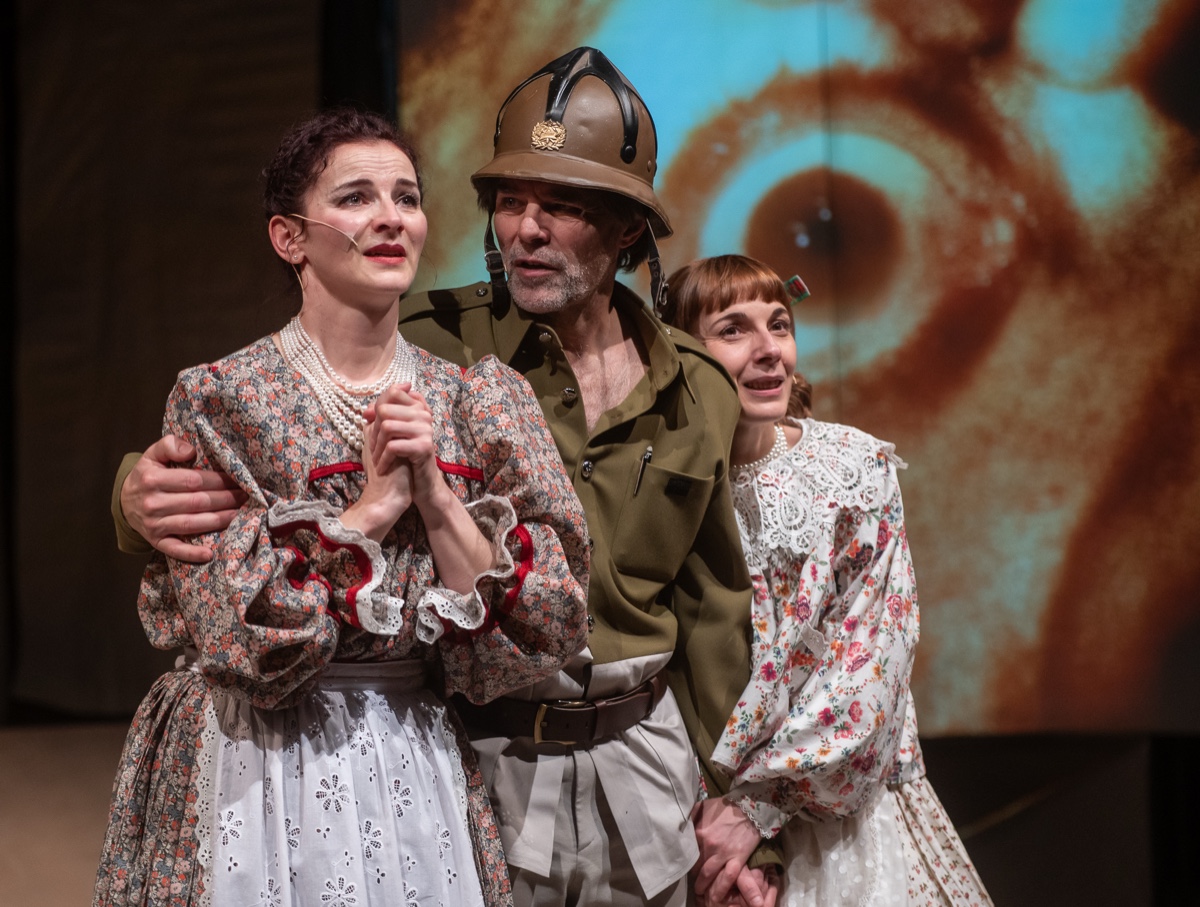
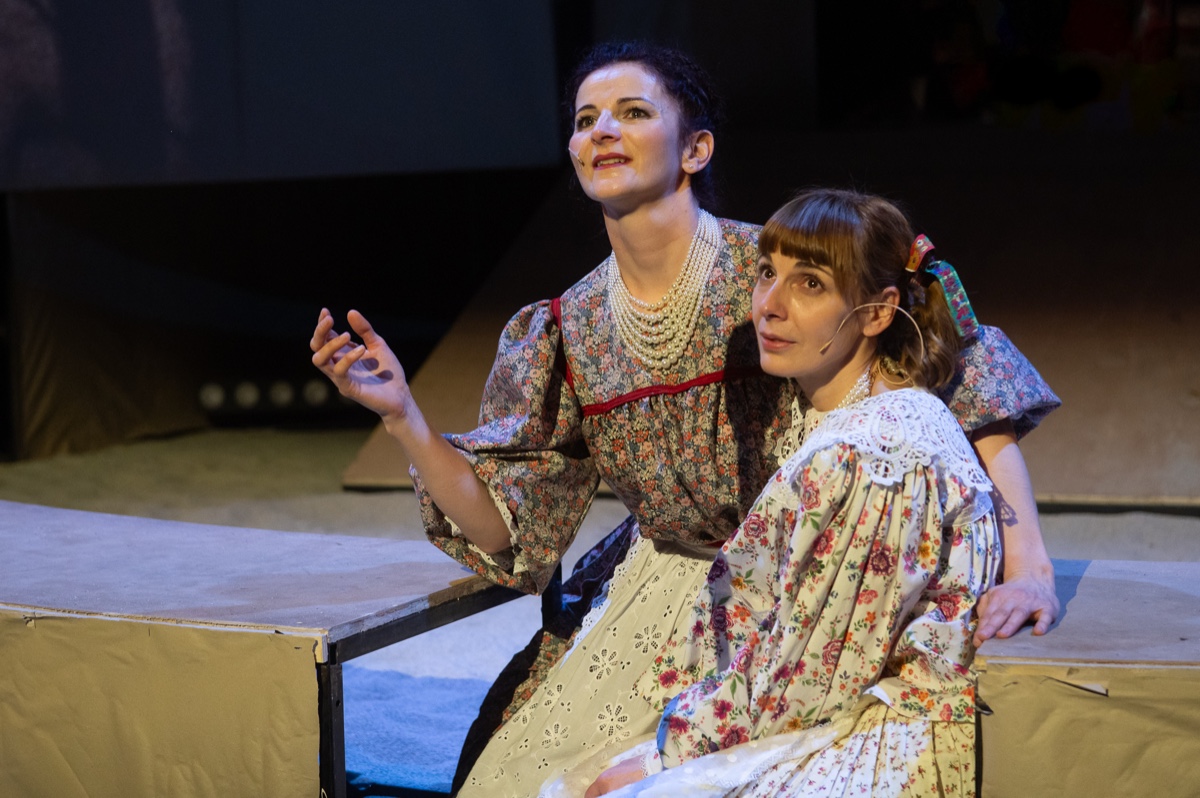
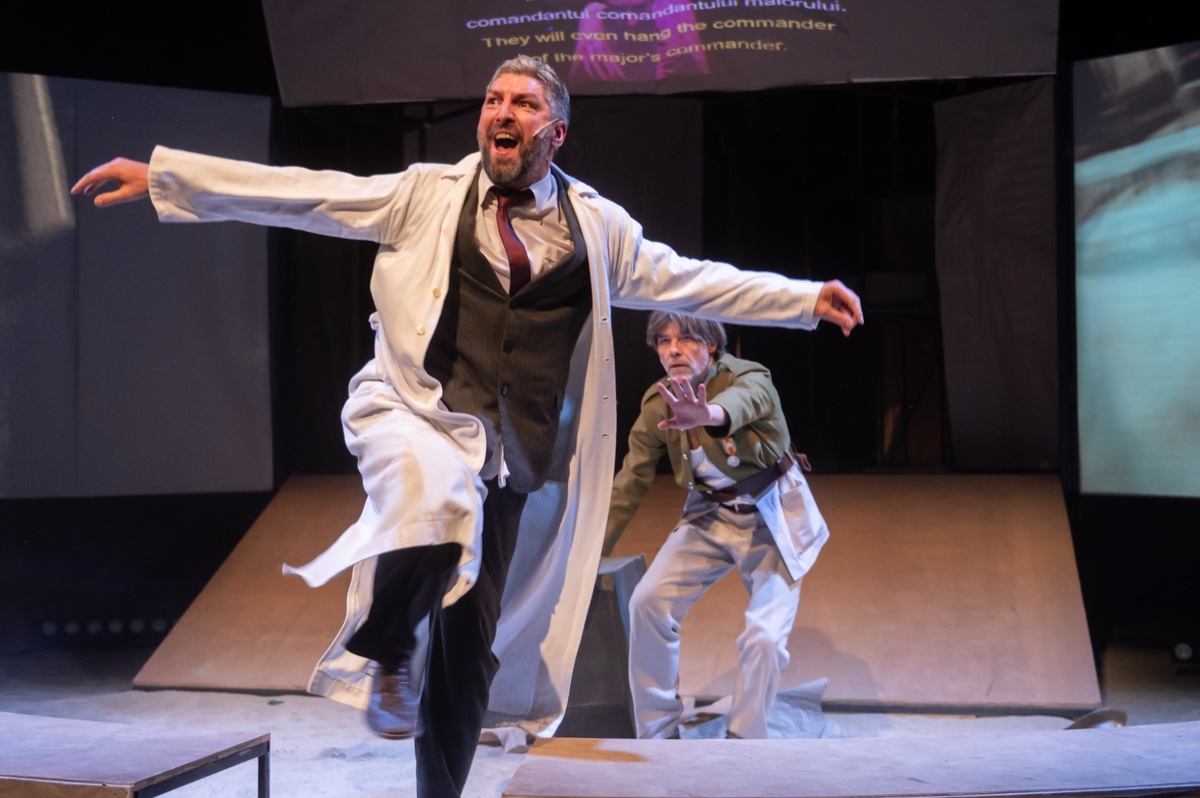
What happens when obedience stops being a strategy and becomes the only possible response? The Tót family lives somewhere in the Banat. Their only son is at the front, in the middle of World War II. At the boy’s suggestion, a major suffering a nervous breakdown comes to the family’s home to recover. The parents and the sister receive the officer as if their son’s fate depended solely on their hospitality: they tiptoe, they bend to his every whim, even though it is no longer even certain that the son and the major are still fighting on the same side.
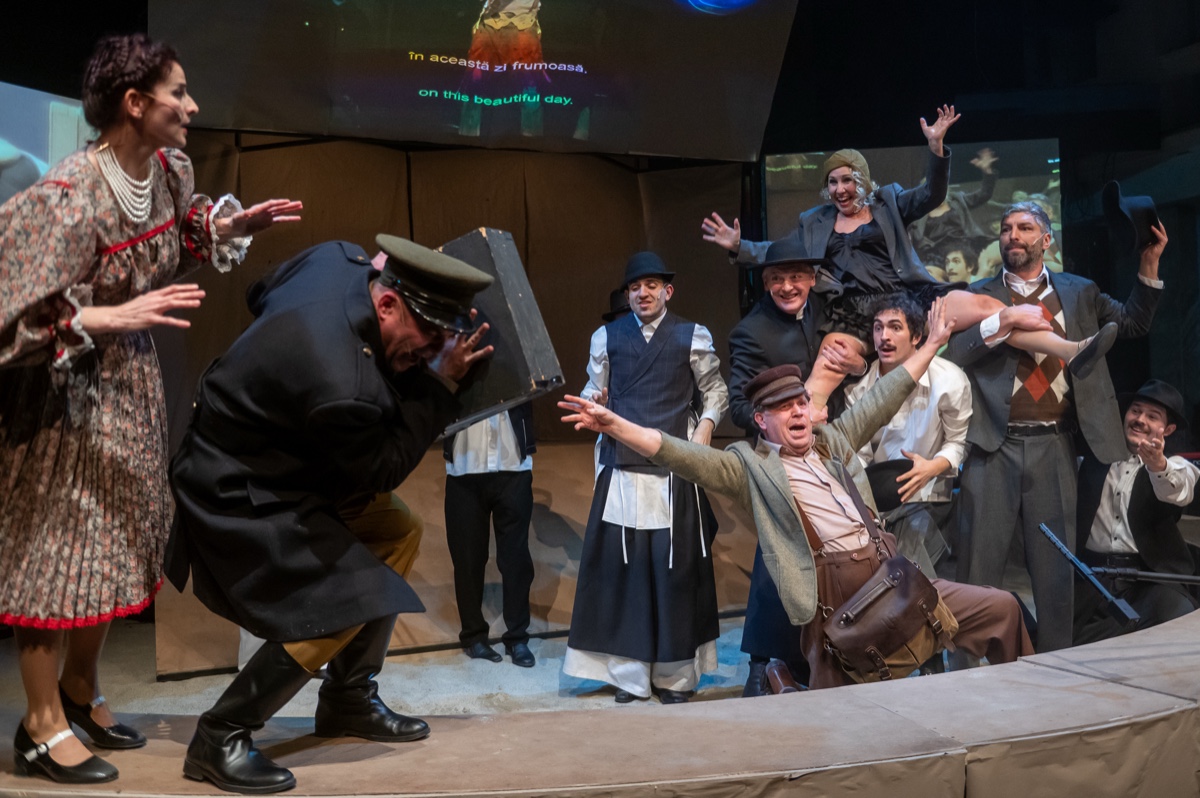
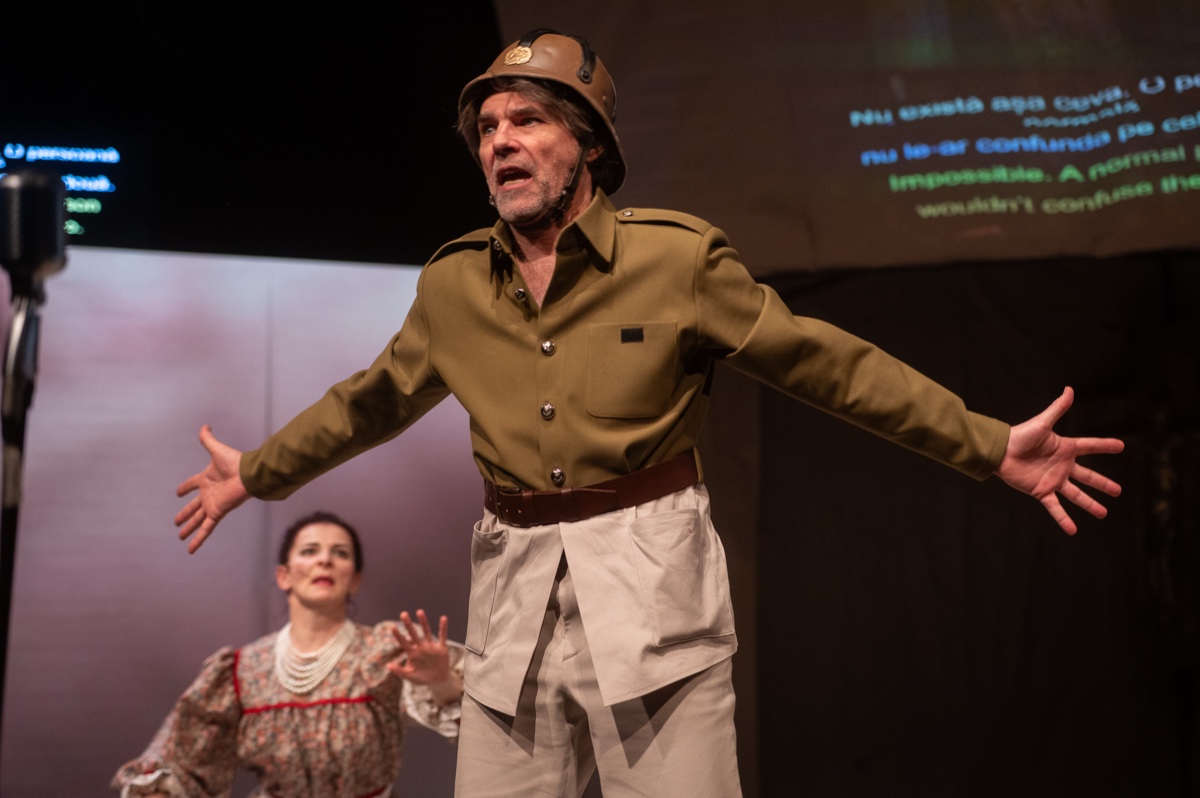
In Horváth Hunor’s staging for the «Csiky Gergely» Hungarian State Theatre of Timișoara (2026), the action shifts from the small mountain village of Örkény István’s original text to the Banat, a border territory where the language of power no longer matches that of the community. The major speaks Romanian; the family, Hungarian. This linguistic fracture amplifies the tension between submission and dignity, between the intimate and the institutional.
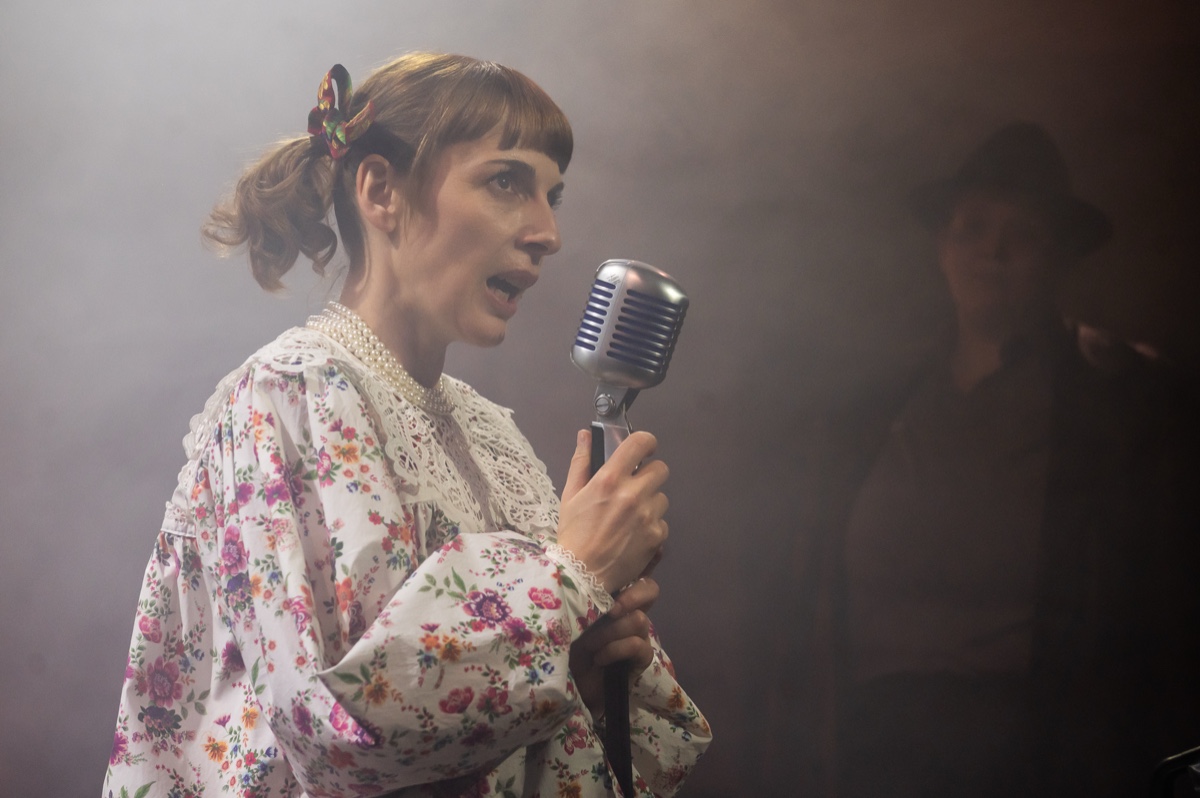
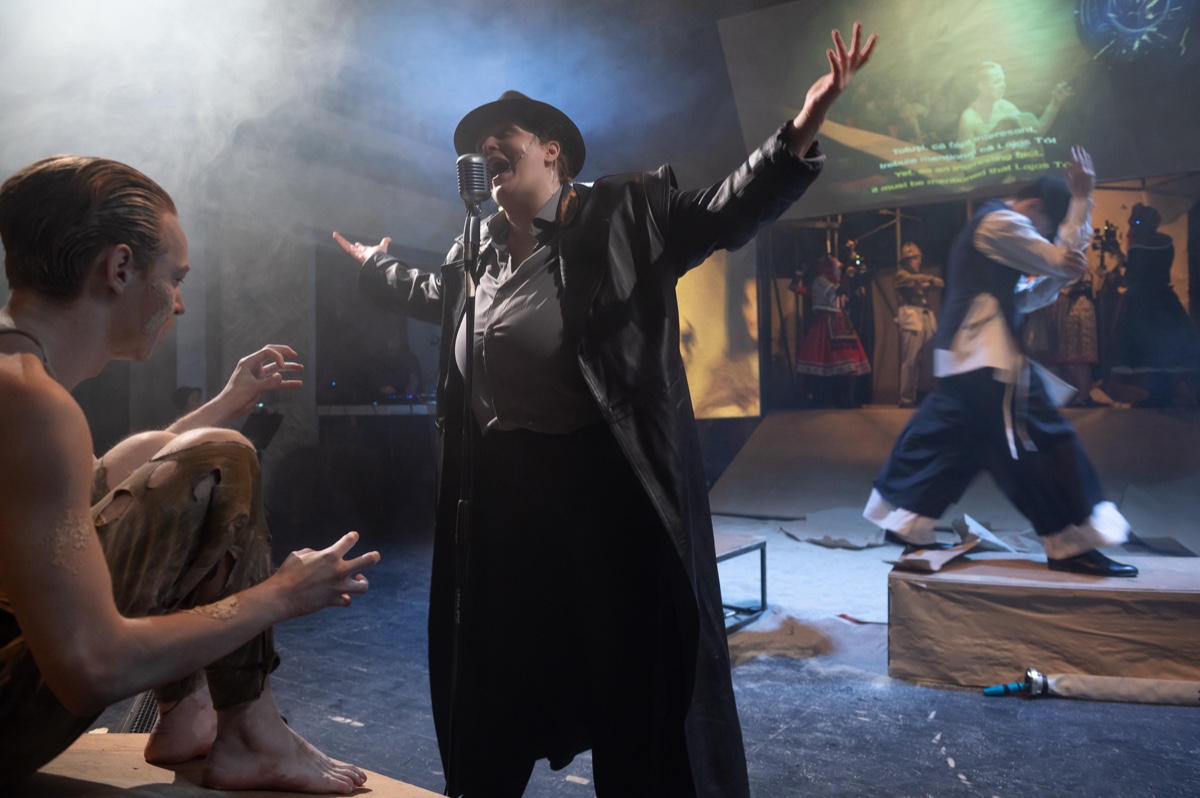
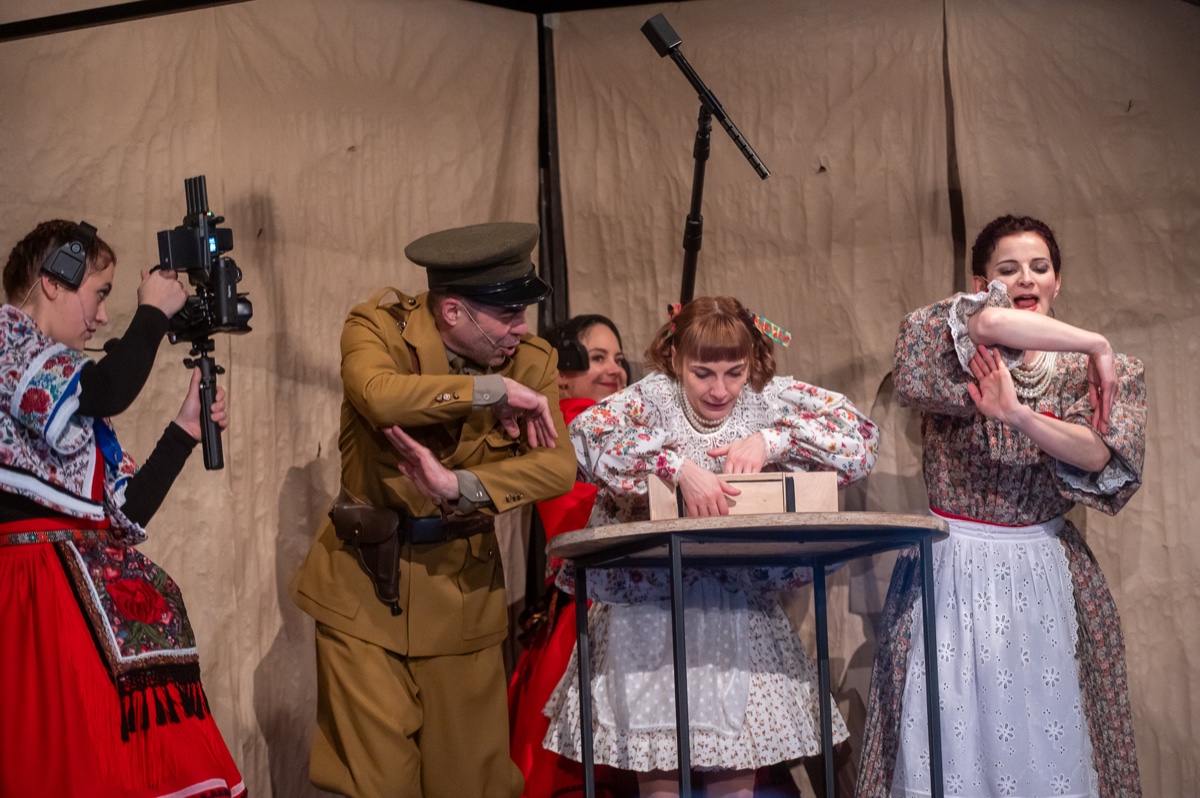
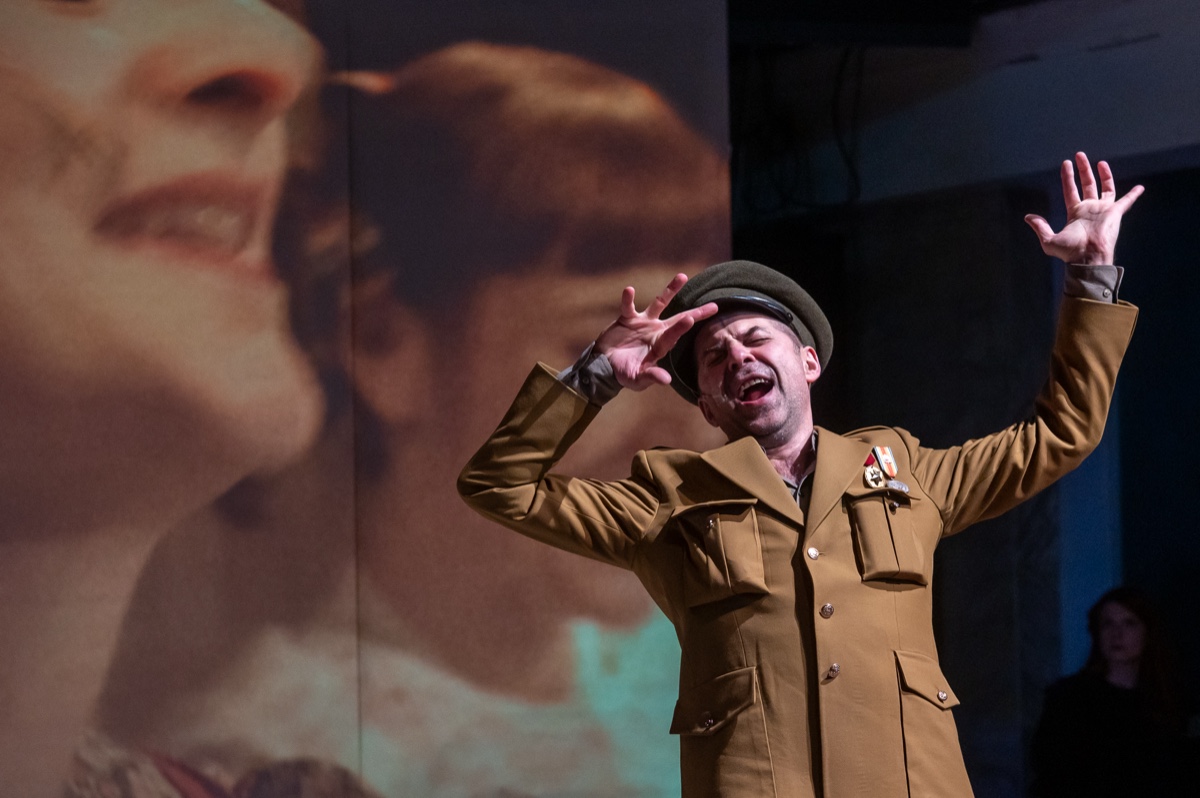
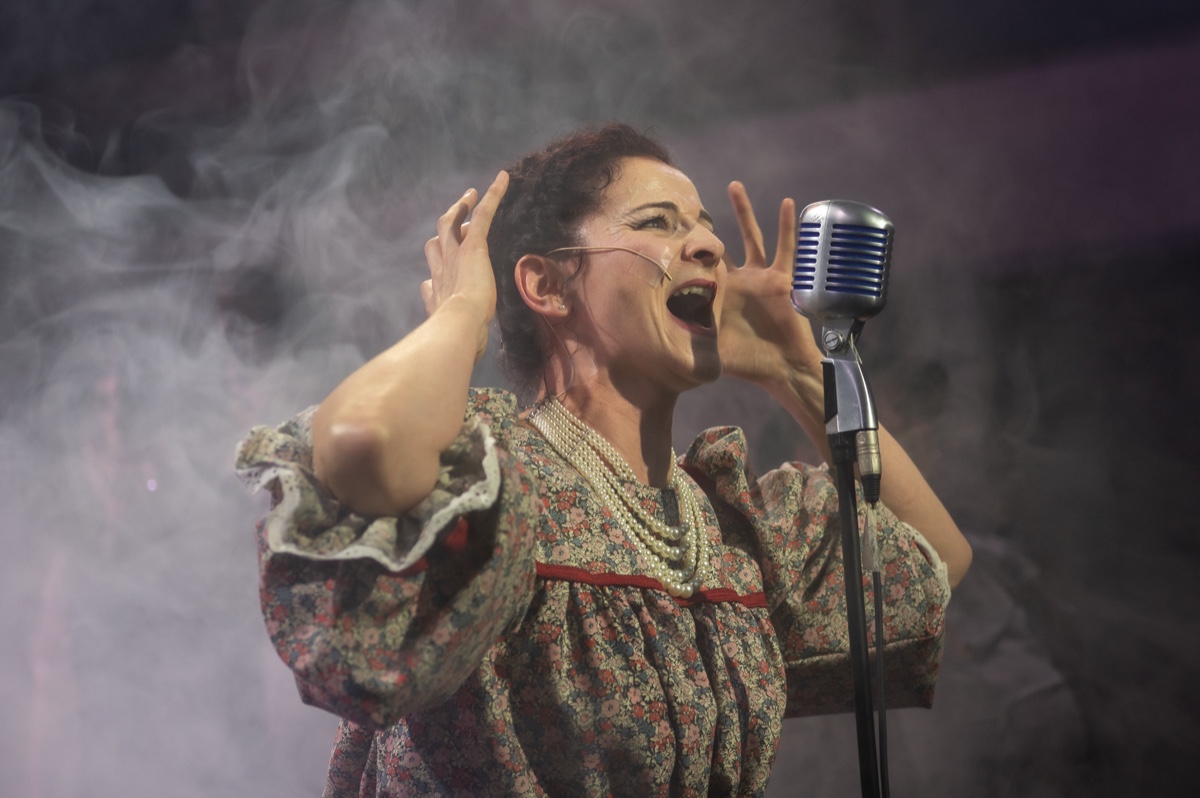
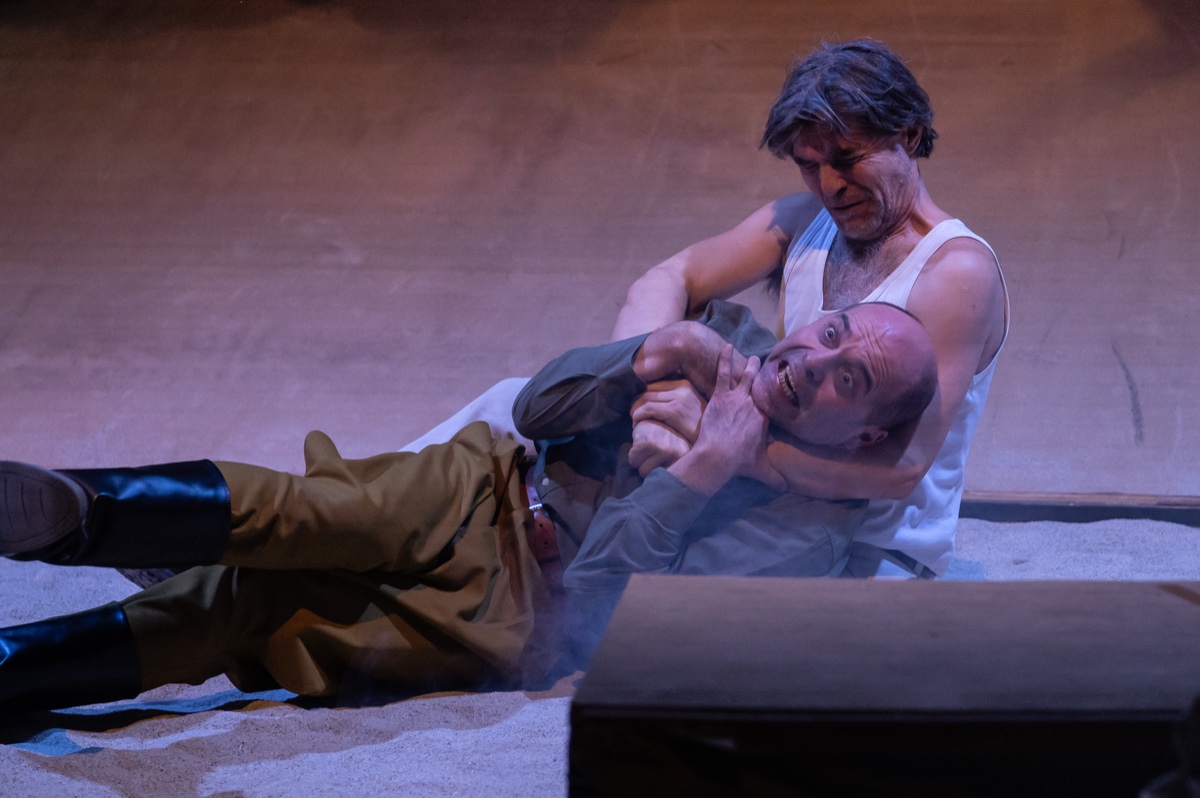
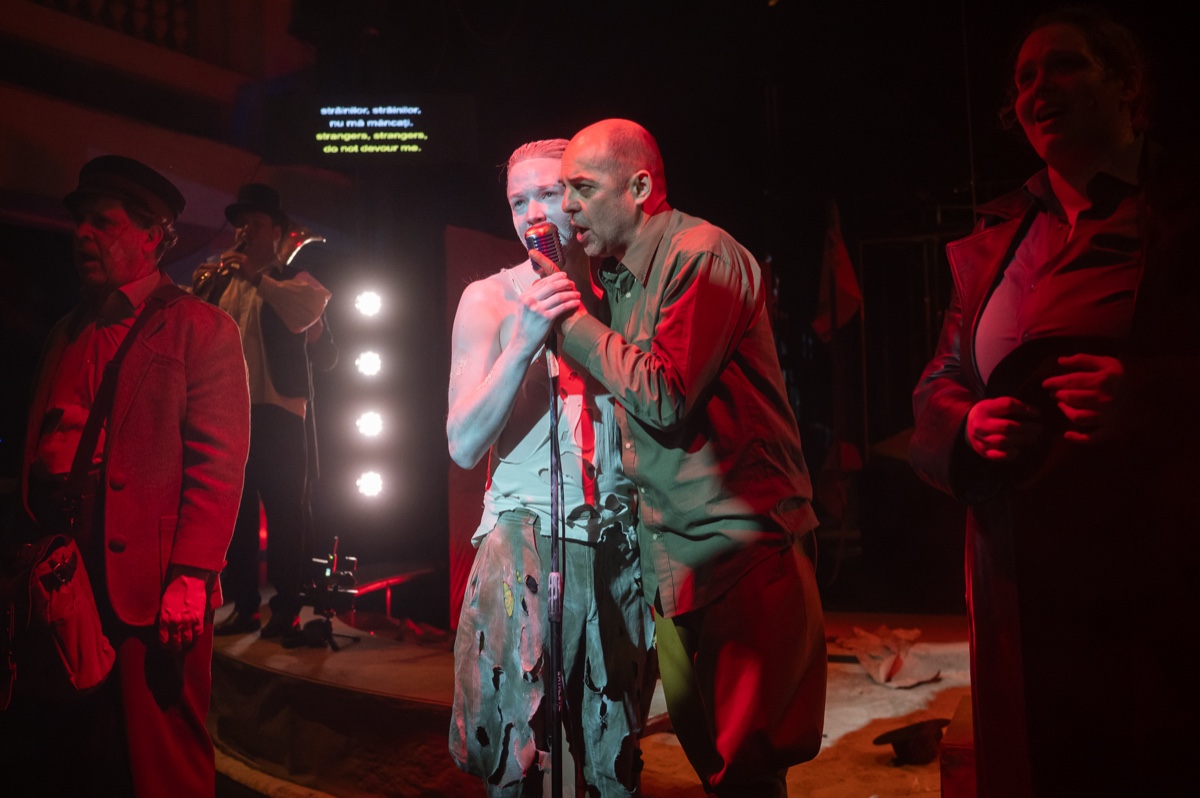
The show unfolds as a total event: four hours in which electronic music and folklore, live video art, butoh choreography and a set design of cardboard boxes and sand build a universe where the absurd grows until it devours normality. Butoh here is neither a decorative element nor a movement style: it is the dramaturgy of the body running in parallel to that of the text — a complete physical score that runs through the three acts and makes visible, in the performers’ flesh, what words cannot name. Neither historical drama nor parody: a black-humour memento on how small cracks end up crumbling families, communities and the human condition itself.
PROCESS
My work on Tóték is not limited to a one-off choreography: it is a dramaturgy of the body that runs through the show’s three acts, in collaboration with Baczó Tünde, Melles Endre and Ádám Julcsi.
The whole cast received butoh training as part of the creation process. This training did not aim for the actors to dance butoh, but for them to find in their bodies the register of what happens beneath the characters.
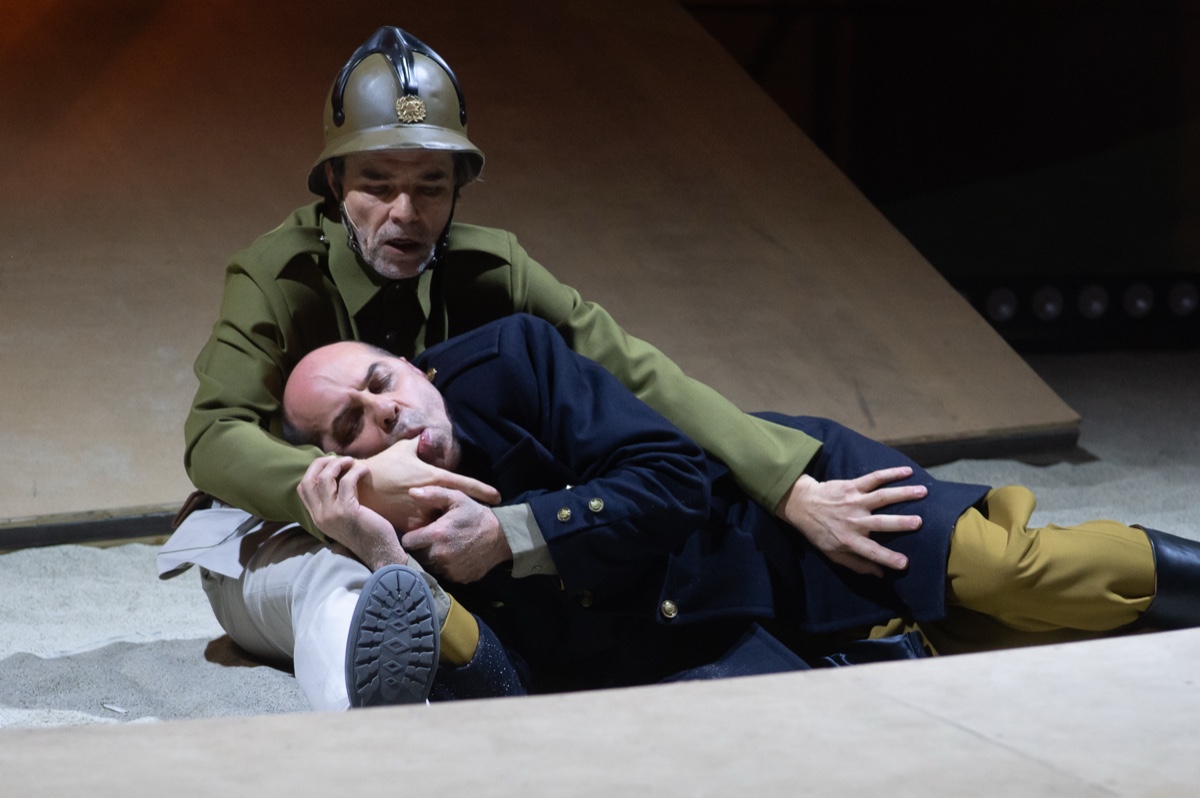
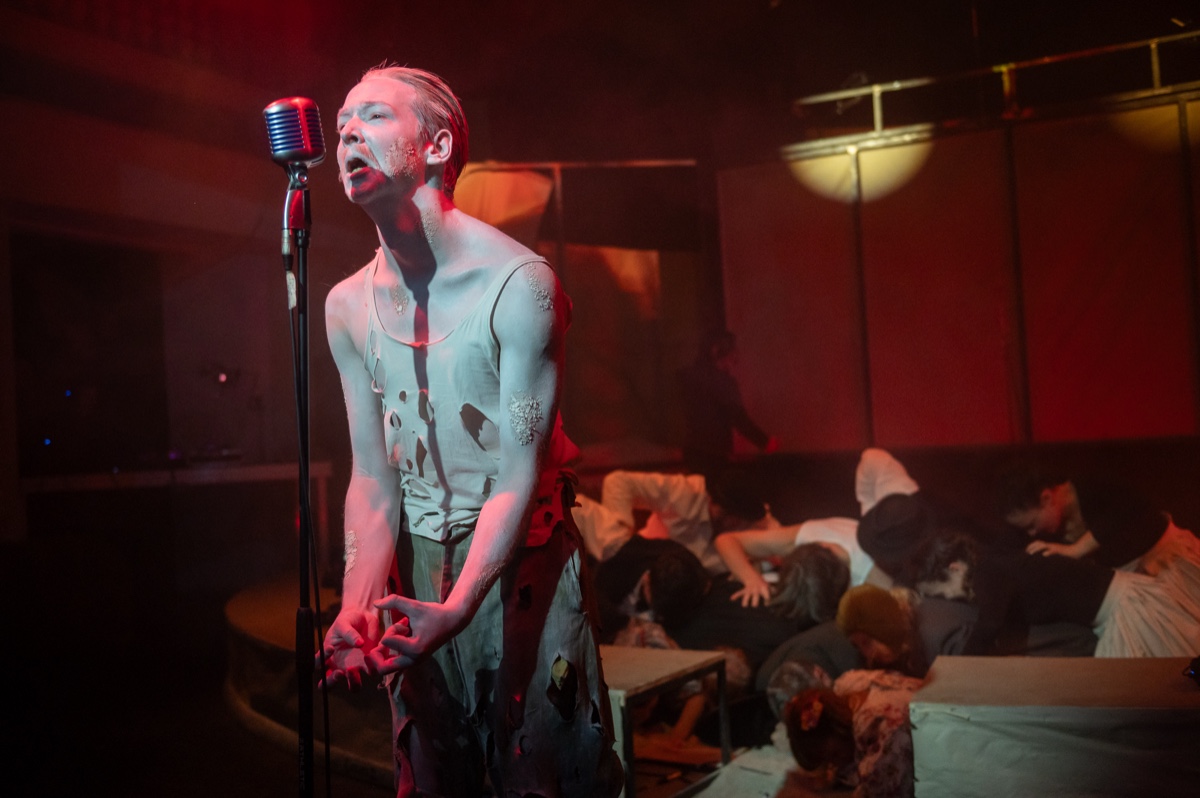
The axis of the score is the son’s body — Gyula, played by Hajas Krisztián — who, over the four hours of the performance, descends centimetre by centimetre along a walkway joining the stage to the back of the auditorium. Ten metres in four hours: a walk outside human time. But this body does not only advance — it decomposes. The choreography is organized in its own chapters running in parallel to the dramatic action: decomposition on the battlefield, where the body’s asymmetry never rests; spasms honouring the forty thousand fallen soldiers; the appearance and disappearance of eyes and mouths like flowers that open for a single night. Each chapter has its own technique, its own intensity, its own relationship to what happens on stage.
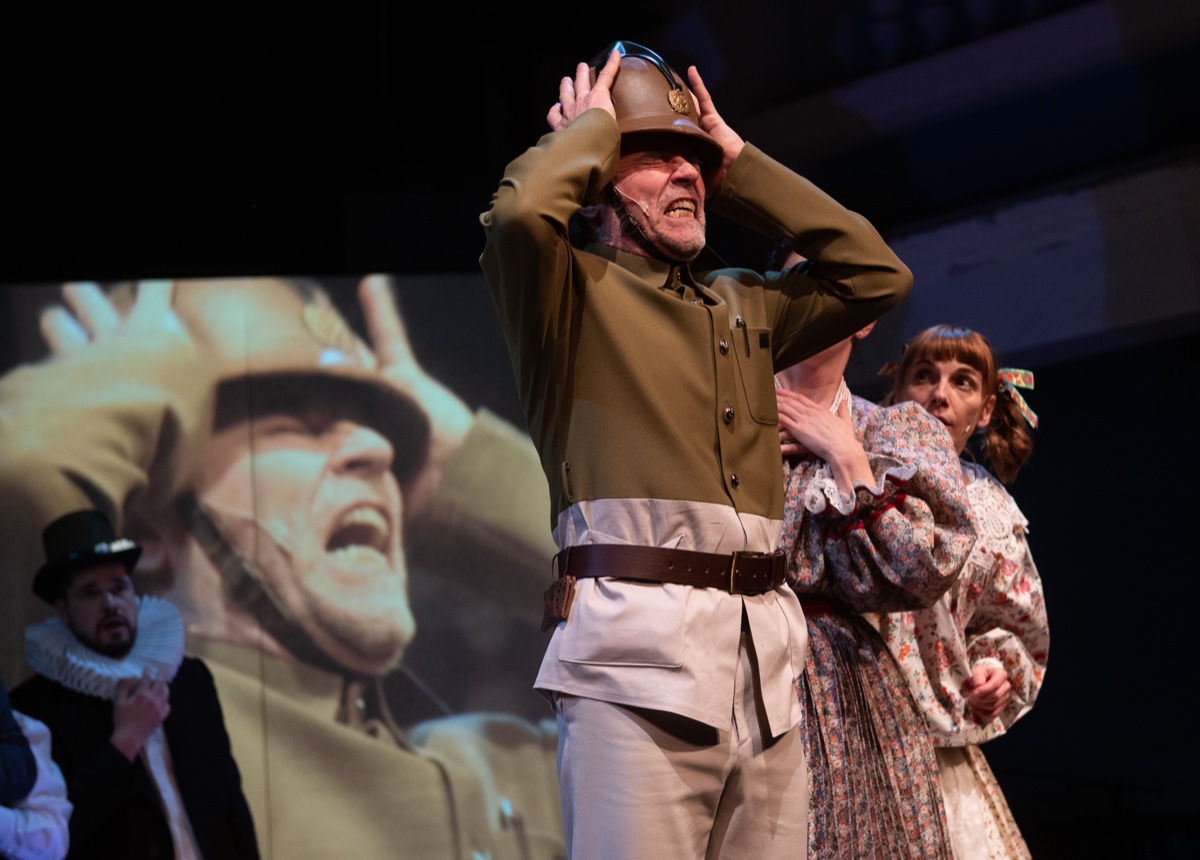
Butoh also operates in the scenes created for the camera: images that make visible the venom the oppressive system spreads through the family and its relationships. Hands passing through walls, eyes piercing the characters’ souls, bodies deforming in the wings and appearing projected over the stage.
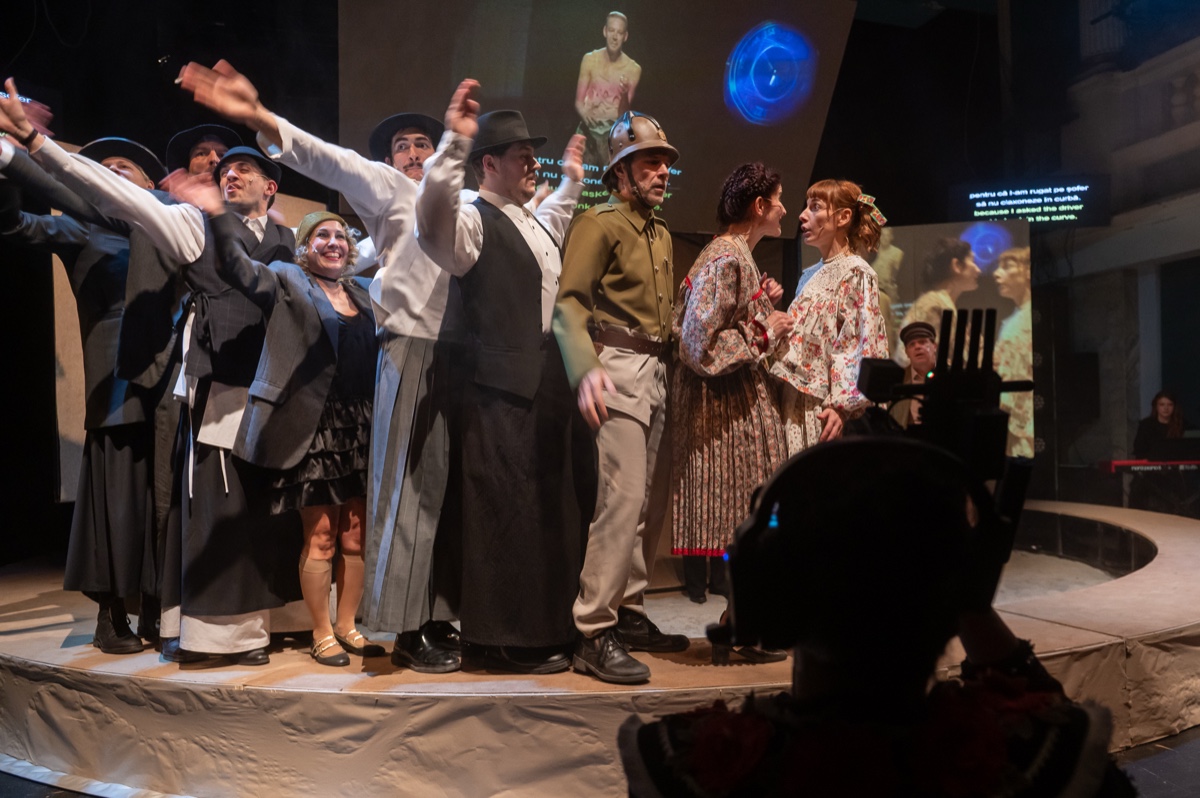
As the play advances, the major’s abstract and hostile world invades the Tóts’ private life — it enters their house, it enters their relationships. The underworld shown in the videos gradually invades the characters’ reality. The characters lose their humanity: their bodies become more butoh, the destructive energies of oppression roam freely in bodies that no longer belong to themselves. The obsessive manufacture of boxes, the group displacements, the uniformity of submissive gestures — everything grows from a minimal movement until it occupies the entire stage at the end of the show.


SYNOPSIS
A family welcomes a military man into their home. What begins as hospitality becomes servitude: silencing the car horn, stopping the postman’s breathing, suppressing the dog’s bark, making boxes without pause. The major shoots the clock — stops time — and everything begins to function under a logic that is neither reason nor madness: it is obedience turned into habit.
The dead fall at the front. Letters arrive censored, delayed or torn. The postman, in his clumsy kindness, decides what the family should and shouldn’t know. Neither hope nor fear directs the actions any more: only the inertia of a world that has accepted its own disintegration.
When did it stop being a choice? The son descends toward death while the family makes boxes for the man who perhaps can no longer save him. In the end, the crack in the plaster has spread so far that no wall remains.
STRUCTURE
The show is organized in two parts with an interval. The first establishes the world of the Tóts and the major’s arrival, building submission progressively. The second explores the paroxysm of the absurd up to an unexpected final twist. Across the four hours, simultaneous layers operate in parallel: the live action, the video projections on the cardboard walls, the son’s presence-descent on the walkway, the music oscillating between the folkloric and the electronic, and a camera crew filming both the stage and the wings, dissolving the border between the visible and the hidden.
ARTIST’S NOTE
Working on Tóték meant taking butoh into unfamiliar territory: a large-scale theatre production with a numerous cast. The challenge was not to impose a language, but to infiltrate it — for butoh to work like the very venom the play tells. Training the whole cast was key: not so that they would dance, but so that their bodies could register the transformation the text narrates in words.
With Hajas Krisztián we built a three-act score inside the play’s two acts: each chapter with its technique, its intensity, its way of dialoguing with what happens on stage. Ten metres of walkway in four hours. The body decomposing at a speed perceptible only by observing from the void — like real decomposition.
I discovered that butoh does not need a stage of its own to do what it does: to inhabit time, to infiltrate matter and to make visible what rots beneath.
GALLERY

ARTISTIC CREDITS
- Classification: Theatre / Multidisciplinary adaptation
- Text: Örkény István — Tóték (The Tót Family)
- Premiere: 2026
- Duration: Approx. 240 minutes (with interval)
- Rating: +14
- Company: Teatrul Maghiar de Stat «Csiky Gergely», Timișoara
- Direction: Horváth Hunor
- Dramaturgy: Orbán Enikő
- Set design: Golicza Előd
- Costumes: Andreea Săndulescu
- Butoh choreography: Matilde J. Ciria, Baczó Tünde
- Stage movement: Melles Endre, Ádám Julcsi
- Original music: Cári Tibor, Tamás Kolozsi
- Musical coordination: Tamás Kolozsi
- Musical répétiteur: Pál Petra
- Lighting design: Nichita Teodorescu
- Video and mapping design: Dan Basu, Ilinca Popescu
- Film direction: Laura Brumă
- Soundscapes: DJ K-Lu
- Sound design: Kupán Zsolt
- Prompter: Czumbil Marika
- Stage management: Bálint Előd
Cast: Tót Lajos — Mátyás Zsolt Imre · Tót Mariska — Borbély Bartis Emília · Tót Ágika — Lőrincz Rita · The Major — Bandi András Zsolt · Gyuri the postman — Balázs Attila · The Teacher — Molnos András Csaba · The Priest — Kocsárdi Levente · Gizi Gézáné — Tar Mónika · The well-digger — Tar Erik · Lőrincke — András Gedeon · Neighbours / Operators — Foltányi Edina, Karsai Dóra, Vincze Erika · Narrator (Örkény) — Tóth D. Zsófia · The son, Gyula — Hajas Krisztián · Neighbour — Simonfi-Harkay Sándor · Girl — Molnos Abigél