
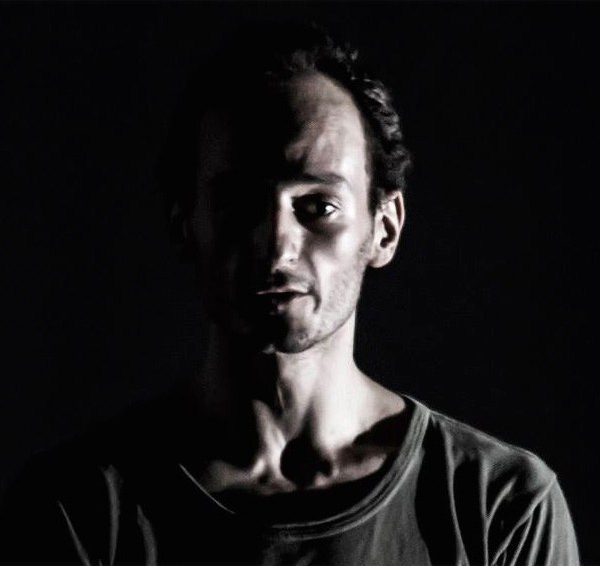
Matilde J Ciria. Murcia (España) 1979.
«La curiosidad ha sido la consejera que ha guiado las grandes decisiones de mi vida.
Cuando me pregunto cómo he llegado hasta aquí, veo un viaje impulsado por una curiosidad infinita, el deseo de comprender, de ir más allá de la mecánica del mundo y las habilidades, para profundizar en la esencia de la experiencia humana.
Mi fascinación por la tecnología no nació del deseo de aprender a programar, sino del impulso por descifrar los patrones que rigen mi entorno: un universo de lógicas hermosas, pero incompleto sin la belleza caótica de las emociones humanas.
Desde esta perspectiva, mi transición al escenario y al clown se vuelve natural. La nariz roja se convierte en una lupa para examinar la naturaleza humana: vulnerable, llena de fracasos y absurdos, que al compartirse en escena permiten generar momentos de verdadera conexión.
En este viaje escénico, encontré mis mayores maestros de manera inesperada: en hospitales, en centros de atención, en Chernóbil. El trauma y el sufrimiento me despojaron de mi ingenuidad. Ante ese dolor humillante, las herramientas del clown resultaron insuficientes. Esta época, aunque dolorosa y desesperanzadora, fue posiblemente la más importante. Me enseñó que la comprensión que buscaba requería sumergirme en una profundidad aterradora.
Encontrar el butoh fue como llegar a un hogar que no sabía que tenía, un lenguaje que siempre supe, pero nunca había hablado. Comprendí que el cuerpo contiene una sabiduría que ni la razón ni la emoción pueden acceder por sí solas. En esta perspectiva, cada movimiento es un diálogo con la existencia y cada performance un acto de conexión con la vida.
Mi trabajo gira en torno a la locura: la locura de ser, de ser humano, de ser yo; la locura del amar y del vidir. Una locura que me ha llevado a trascender las fronteras de la escena, interiores y exteriores. Performer y público, arte y vida; dicotomías que se desdibujan en cada proyecto, en cada actuación, en cada taller.
Mi viaje, de programador a clown, de bailarín de butoh a lo que sea que me estoy convirtiendo, no son cambios de carrera, sino una profundización en el hueco, un camino de expansión del espacio que soy cuando no soy. Una verdad que solo es posible ver cuando miramos juntos.
En mi práctica, el arte y la vida se disuelven en un mismo acto de exploración, convirtiendo cada creación en una oportunidad para investigar los límites entre lo físico, lo emocional y lo conceptual. El escenario es mi laboratorio, y los experimentos consisten en la búsqueda de caminos para compartir la experiencia de ser humano.»
Trayectoria y Hitos
Con una carrera que cruza disciplinas y fronteras, el trabajo de [Nombre del artista] se desarrolla en la intersección del butoh, el clown, el teatro físico y la exploración escénica total. Como creador y docente, ha investigado la relación entre cuerpo y escena, como reflejo social y de la creatividad y la locura como motor de transformación.
Su práctica artística ha sido influenciada por maestros de renombre en el campo del butoh, como Yumiko Yoshioka, Masaki Iwana, Yukio Waguri, Atsushi Takenouchi, Minako Seki, Natsu Nakajima, y Moeno Wakamatsu. Además, su formación se ha enriquecido con disciplinas como el teatro físico, el clown, y pedagogías como las de Philippe Gaulier y Michelle Dellarie, así como su trabajo en clown hospitalario en contextos de vulnerabilidad extrema.
Como performer y director, ha cruzado las fronteras entre el butoh, el teatro físico y el clown, creando obras como Frankenstein (Teatro Nacional de Costa Rica), Corpo em Crise (noTchão) y PublicoXLorca (Iberescena) entre otras. Su trabajo atraviesa las fronteras de lo convencional tanto en forma, contenido, como en los espacios donde son presentados.
En solitario, ha creado piezas como Machina Mundi y Evolución Especular, fusionando butoh, teatro y clown, con el fin de explorar la conexión y la irreverencia de estos lenguajes. Además, ha diseñado metodologías pedagógicas propias que combinan improvisación, coreografía y experimentación, materializadas en proyectos como Aula Nostra, ni.butoh y Skenautica.
A lo largo de su carrera, Matilde ha sido un agitador cultural, impulsando iniciativas como RipollEsDansa, Kojoteki, ALMA NEGRA (Festival de Butoh Ibérico) y BIG (Butoh International Gathering) entre otras, fomentando la colaboración entre artistas de distintas disciplinas y geografías. Su trabajo ha sido presentado en festivales internacionales en Europa e Hispanoamérica, y su labor académica se ha enfocado en la reflexión sobre el cuerpo y su potencial expresivo.
english
Matilde J Ciria. Murcia (España) 1979.
«Curiosity has been the advisor that has guided the major decisions of my life.
When I ask myself how I have arrived here, I see a journey driven by an infinite curiosity, the desire to understand, to go beyond the mechanics of the world and skills, and to dive into the essence of human experience.
My fascination with technology did not stem from the desire to learn programming, but from the impulse to decipher the patterns that govern my surroundings: a universe of beautiful logics, yet incomplete without the chaotic beauty of human emotions.
From this perspective, my transition to the stage and to clowning becomes natural. The red nose becomes a magnifying glass to examine human nature: vulnerable, filled with failures and absurdities, which, when shared on stage, allow for moments of genuine connection.
In this theatrical journey, I found my greatest teachers unexpectedly: in hospitals, care centers, and in Chernobyl. Trauma and suffering stripped me of my naivety. In the face of such humiliating pain, the tools of clowning proved insufficient. This time, though painful and despairing, was possibly the most important. It taught me that the understanding I sought required me to dive into a terrifying depth.
Finding butoh was like arriving at a home I didn’t know I had, a language I had always known but had never spoken. I understood that the body contains a wisdom that neither reason nor emotion can access on their own. In this perspective, every movement is a dialogue with existence, and every performance an act of connection with life.
My work revolves around madness: the madness of being, of being human, of being me; the madness of love and of life. A madness that has led me to transcend the borders of the stage, both inner and outer. Performer and audience, art and life; dichotomies that blur in every project, in every performance, in every workshop.
My journey, from programmer to clown, from butoh dancer to whatever I am becoming, is not a career change but a deepening into the void, a path of expanding the space that I am when I am not. A truth that is only possible to see when we look together.
In my practice, art and life dissolve into the same act of exploration, turning every creation into an opportunity to investigate the boundaries between the physical, the emotional, and the conceptual. The stage is my laboratory, and the experiments consist of searching for ways to share the experience of being human.»
Trajectory and Milestones
With a career that crosses disciplines and boundaries, Matilde’s work develops at the intersection of butoh, clowning, physical theater, and total theatrical exploration. As a creator and teacher, he has investigated the relationship between body and stage, as a social reflection, and creativity and madness as drivers of transformation.
Matilde’s artistic practice has been influenced by renowned butoh masters such as Yumiko Yoshioka, Masaki Iwana, Yukio Waguri, Atsushi Takenouchi, Minako Seki, Natsu Nakajima, and Moeno Wakamatsu. Additionally, [his/her/their] training has been enriched by disciplines such as physical theater, clowning, and pedagogies from Philippe Gaulier and Michelle Dellarie, as well as work in hospital clowning in contexts of extreme vulnerability.
As a performer and director, he has crossed the boundaries between butoh, physical theater, and clowning, creating works like Frankenstein (National Theater of Costa Rica), Corpo em Crise (noTchão), and PublicoXLorca (Iberescena), among others. His work transcends conventional boundaries in form, content, and the spaces where it is presented.
On his own, he has created pieces such as Machina Mundi and Evolución Especular, merging butoh, theater, and clowning to explore the connection and irreverence of these languages. Furthermore, he has developed original pedagogical methodologies combining improvisation, choreography, and experimentation, materialized in projects such as Aula Nostra, ni.butoh, and Skenautica.
Throughout his career, Matilde has been a cultural agitator, promoting initiatives such as RipollEsDansa, Kojoteki, ALMA NEGRA (Iberian Butoh Festival), and BIG (Butoh International Gathering), among others, fostering collaboration between artists from various disciplines and geographies. His work has been presented at international festivals in Europe and Latin America, and his academic work focuses on reflection on the body and its expressive potential.
Curriculum Vitae (spanish)
 MATILDE